
Raising confident and independent kids is something most parents deeply desire, yet it can feel overwhelming. As a parent, we want our children to believe in themselves, make good choices, and handle challenges on their own. But sometimes, you see them behaving entirely different from your expectations. At some points, you might think you are not doing well as a parents, but you are actually doing your best. What you lack is just the practical way to raise confident and independent kids, which I’m here to guide you on.
Confidence and independence don’t develop overnight. They are built through everyday experiences, patience, and trust in both you and your child. How you respond to mistakes, how you encourage efforts, and how much space you allow your child to try things on their own. Your actions help them to be confident and independent.
Many parents worry that allowing mistakes means failing their child. Unknown to them that those small mistakes are where confidence begins to grow. Every time a child tries, fails, and tries again, they learn that they are capable.
In this article, I will share practical and realistic ways to raise confident and independent kids. Kids that fit into real life, kids that grow into someone who believes in themselves and feels capable of navigating the world. I have tried these things with my kids and it really worked for us and I know it will also work for you as well.
You can also read simple ways to discover your child’s love language for better parenting.
Practical Ways To Raise Confident And Independent Children
1. Encourage Decision Making From Early Stage
One of the simplest and most powerful ways to raise confident and independent children is to let them make choices not minding their age. When you allow your child to choose between two outfits, decide which snack to eat, or pick a bedtime story, it helps them to understand that they have a mind of their own capable of taking decisions.
Sometimes as parents, we might want to decide everything for our children because it feels faster and safer. Unknown to us that when kids are never given a chance to choose, they begin to doubt their own judgment. On the other hand, when they are trusted with simple decisions, they start to build self-confidence. They learn to think, weigh options, and stand by their choices.
Encouraging kids to make decisions doesn’t mean letting them run the household. You will still be in charge, but you can guide them within safe boundaries. For example, instead of asking, “What do you want to wear?” you can say, “Do you want the blue shirt or the red one?” This keeps things manageable while still giving them control.
2. Don’t Do for Your Children What They Can Do for Themselves
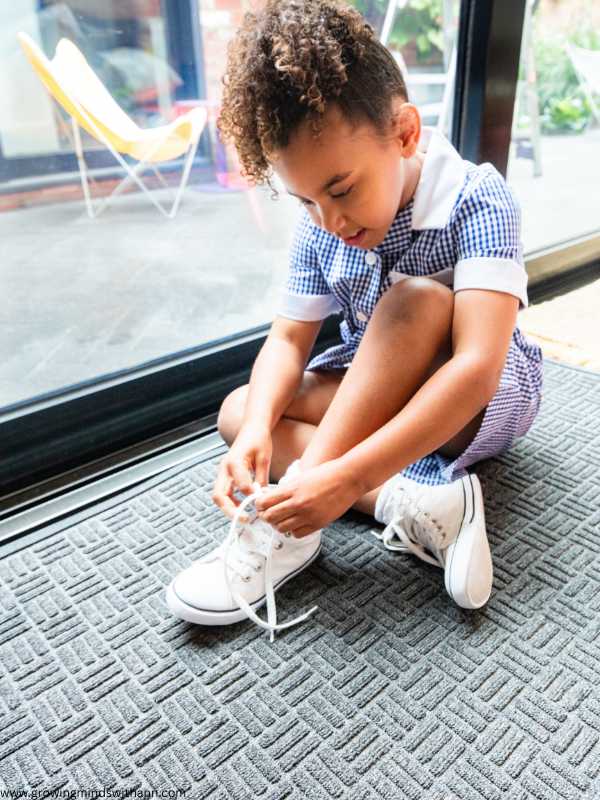
There was a time when I did almost everything for my child without even thinking twice. I tied the shoelaces, packed the bag, cleared the plate after meals. I did all these things not because my child couldn’t do these things, but because it felt quicker and easier for me. In my mind, I was being helpful. But one day, I realized my child had started waiting for me to do things they were already capable of doing. That was my wake up call.
As parents, this urge is completely natural. We want to protect our children, save them from frustration, and keep things moving smoothly. But when we constantly step in, we unintentionally teach them that they can’t handle things on their own. This can affect their confidence and make them doubt their own abilities.
When I began to step back and allow my child to do small, age appropriate tasks like tying their shoes, putting away toys, or taking their plate to the sink. They struggled at first, made a few messes, and took longer than I would have liked. But with each attempt, they grew more confident. They started saying, “I can do it myself,” and meaning it.
Not doing for your children what they can do for themselves doesn’t mean withdrawing support. It means offering guidance without taking over. You can stand nearby, encourage them, and be ready to help if truly needed, but give them the space to try first. Those everyday moments teach children responsibility, patience, and self belief.
3. Let Them Speak For Themselves
When people ask my children questions directly, I make a very conscious effort to step back and let them answer for themselves. It didn’t come naturally at first. Sometimes they pause for a while, searching for the right words, or respond shyly. When this happens, my instinct is to jump in and help. But I realized that each time I did that, I was taking away their chance to find their own voice.
So I started doing something different. I would give them space to respond in their own time and in their own words. Even when their answers were not perfect, I would allow them to finish the conversation without interrupting or correcting them immediately. This helped them to be more confident, more expressive, and less afraid of speaking up.
Later on, in a calm and private moment, I would gently explain or clarify anything they got wrong. This way, they learned without feeling embarrassed or undermined. Through this small change, I have seen my children grow more comfortable representing themselves and trusting their ability to communicate. And in the process, I learned that sometimes the best teaching happens when we step back and let our children speak for themselves.

4. Encourage Success and Celebrate Failure
For a long time, I thought my role as a parent was to cheer only when things went right. Good grades, finished tasks, small wins, those were the moments I celebrated. When things didn’t work out, my instinct was to soften the disappointment or quickly move past it. As time goes on, I noticed my child becoming afraid of getting things wrong. That is when I realized I needed to change how we talked about success and failure.
I started by encouraging success in healthier ways, not by pressuring my child to win or be perfect, but by reminding them that trying matters. I celebrated effort, preparation, and courage, not just achievements. When my child succeeded, we acknowledged the work that went into it, reinforcing the idea that success comes from consistency and persistence.
Then I began to do something that felt uncomfortable at first: I started celebrating failure too. When things didn’t go as planned, instead of disappointment or silence, we talked about what they learned. I would say things like, “You tried hard, and that matters,” or “What do you think this experience taught you?” Slowly, failure stopped feeling like something to hide and became something to learn from.
This shift made a big difference. My child became more willing to take risks, try new things, and step outside their comfort zone. They learned that failure is not the opposite of success but part of it. And as a parent, I learned that when we normalize both success and failure, we raise children who are resilient, confident, and unafraid to keep going, no matter the outcome.
5. Model Confidence And Independence Yourself
Children learn far more from what they see than from what they are told. You can encourage confidence and independence with words all day long, but it’s your everyday actions that leave the deepest impression. This is because Children are natural imitators. I didn’t fully realize this until I began paying closer attention to my own actions.
As parents, we often focus on what we say, we always encourage our children to be confident, brave, and independent. But sometimes we do otherwise without realizing that they are watching. They notice how we react to challenges, how we speak about ourselves, and how we handle mistakes, and those moments quietly shape how they see themselves.
Modeling confidence doesn’t mean pretending to have everything figured out. It means showing your child how to keep going even when things feel uncomfortable. This helps children to understand that confidence is built through effort and resilience.
The same applies to independence. When children observe parents solving problems, making decisions, and taking responsibility, they learn to trust their own abilities. Your actions silently give them permission to believe in themselves.
Blending intention with example makes all the difference. When your words align with your actions, children feel safe to follow your lead. Long before they understand your advice, they absorb your behavior. And often, the confidence and independence they develop are a reflection of what they see practiced at home every day.
Conclusion
Raising confident and independent children requires showing up with intention, patience, and trust. Each time we allow our children to make choices, try things on their own, speak for themselves, and learn from both success and failure, we are quietly building their belief in who they are.
When we model the behavior we hope to see and create a safe space for our children to grow, they begin to trust themselves and the world around them. Little by little, these small efforts shape children to become capable, resilient, and ready to navigate life with confidence.


One thought on “Practical Ways to Raise Confident and Independent Kids”