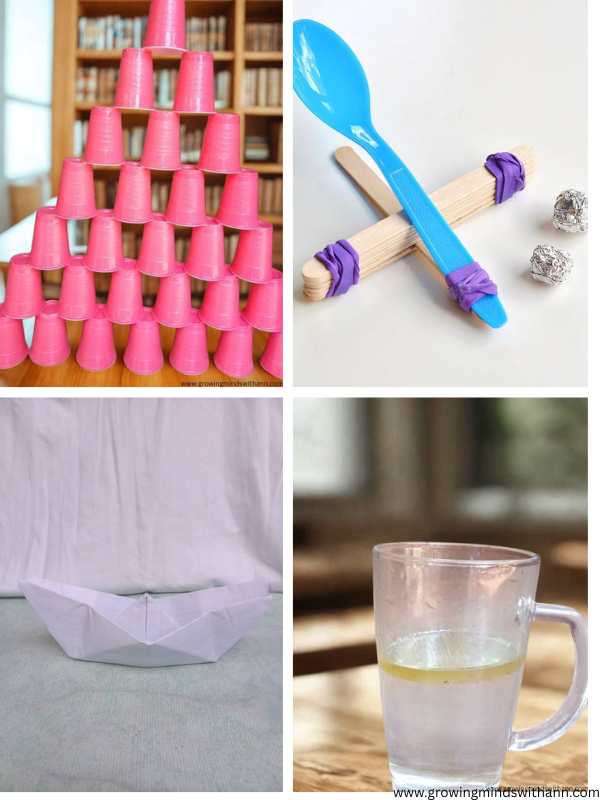
Children are naturally curious. They love to ask questions, touch everything around them and also figure out how things work. That curiosity is exactly why this 5 simple STEM activities for kids are so powerful. Children learn through simple experiments, building projects and hands-on challenges. Also children get the chance to explore their environment, make sense of what they see every day and slowly begin to understand the world around them.
STEM activities help kids learn by doing. Instead of just hearing explanations, they get to test ideas, observe results, and discover answers on their own. Whether they are watching colors mix, building a structure that stands or figuring out why something sinks or floats.
These moments spark excitement and build their love for learning. Kids start to see their surroundings not just as ordinary objects, but as opportunities to explore and discover things for themselves.
STEM activities make learning fun and meaningful. They encourage creativity, build confidence and teach problem-solving skills while satisfying a child’s natural sense of wonder. With the right activities, everyday moments can turn into exciting discoveries, helping kids grow into curious, confident learners who are eager to explore the world around them.
So whether you are a homeschool parent, a mom looking for fun weekend ideas or someone wanting meaningful screen free activities for your kids, these 5 simple STEM activities for kids are perfect ideas for making learning enjoyable and stress free.
Benefits of Simple STEM Activities for Kids
The beautiful thing about simple STEM activities for kids is that they make learning feel completely natural. While on it, kids will think they are just playing, meanwhile, they are actually learning and building skills that will help them for years. And honestly, as parents, we love anything that keeps them curious, busy and smiling without stressing us out.
Below are some of the benefits children derive whenever they engage in any STEM activity.
STEM activities boost problem-solving skills
STEM activities teach kids how to think through challenges instead of giving up right away. When a tower falls, when water spills or when an experiment doesn’t turn out as expected, they learn to try again. These little moments help them understand that problems are not something to fear, but something to figure out.
STEM activities encourage kids to ask questions like, “What went wrong?” or “How can I fix this?” It help them to learn step by step and come up with solutions on their own. Over time, this builds patience, confidence and resilience.
As kids practice problem-solving through play, they begin to apply the same mindset to everyday situations. They become more independent, more confident in their thinking, and more willing to try new ideas.
They encourage creativity and imagination
STEM activities give kids the freedom to imagine, create and explore ideas in their own unique way. Kids get to use their imagination while learning, without feeling restricted.
When children are allowed to experiment and create, they start thinking outside the box. They try new ideas, mix things up, and come up with solutions you might never have thought of. STEM activities encourage kids to take risks, explore possibilities, and express their creativity through hands-on play.
Over time, this creative freedom helps children feel more confident in their ideas. They learn that their thoughts matter and that it is okay to try something new, even if it doesn’t work the first time. STEM becomes a safe space where imagination and learning go hand in hand, making the experience both fun and meaningful.
STEM activities help kids understand the world around them
Children are always trying to make sense of what they see around them. STEM activities give kids simple, hands-on ways to explore their everyday questions in a way that actually makes sense to them.
Through STEM activities, kids begin to connect what they learn to real life. A small experiment with water becomes a lesson about floating and sinking. Building a tower helps them understand balance and strength. Mixing colors teaches them how things can change and work together.
When kids are allowed to explore their environment through STEM, they become more observant and curious. They start paying attention to how things work at home, outdoors and even during playtime. Little by little, they gain confidence in their understanding of the world.
STEM Activities Help Kids Build Teamwork and Communication Skills
STEM activities help kids learn how to take turns, listen to each other’s ideas and work together toward a common goal. As children collaborate, they begin to express their thoughts more clearly, they explain what they want to try, ask questions or suggest new ideas.
Through these shared experiences, kids develop stronger communication and teamwork skills in a relaxed, playful way. They learn how to support one another, handle disagreements kindly and celebrate success together. These are life skills that go far beyond STEM and help children build healthy relationships.
5 Simple STEM Activities for Kids
1. Popsicle Stick Catapult
This simple STEM activity introduces kids to basic engineering and physics concepts like force, motion and cause and effect. It also builds patience, problem-solving skills and confidence. Most importantly, it creates a fun moment where learning feels exciting, playful and memorable. This kind of experience makes kids want to keep exploring and discovering more.
Materials needed are:
-
Popsicle sticks
-
Rubber bands
-
Plastic spoon
- Small lightweight objects to launch (marshmallows, pom-poms or paper balls)
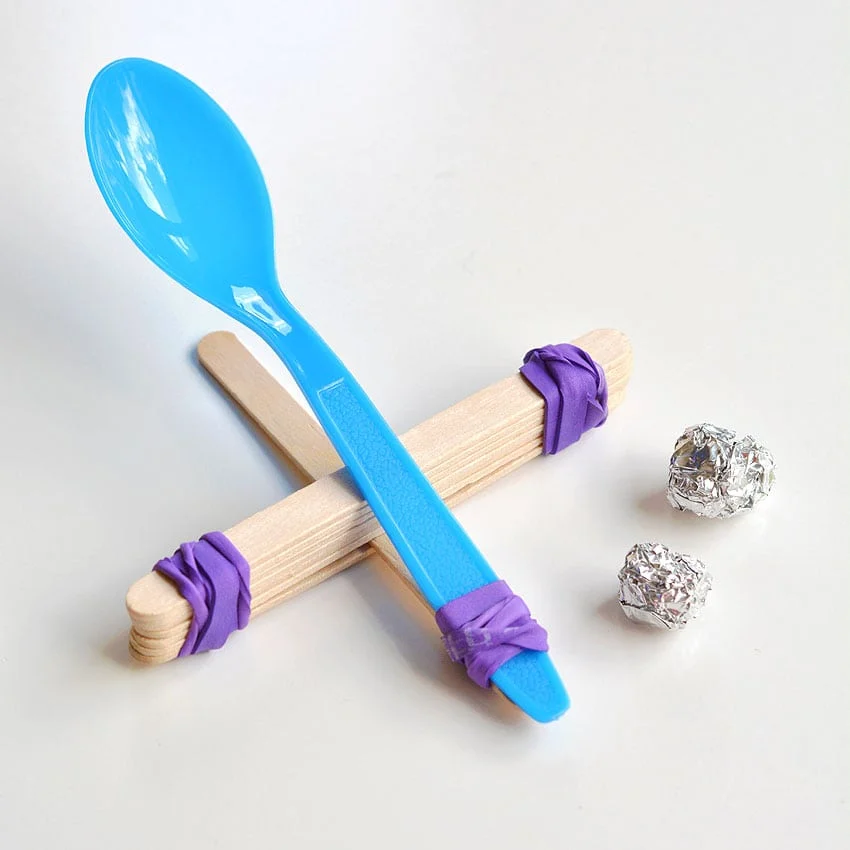 Photo source
2. Sink or Float
Sink or float experiment is one of those classic STEM activities that never gets old. It’s simple, fun and perfect for satisfying a child’s natural curiosity. Kids love making predictions and this activity gives them the chance to guess what will happen and then see the results right before their eyes.
Through this hands-on experiment, children begin to understand basic science concepts like weight, size and density in a very natural way.
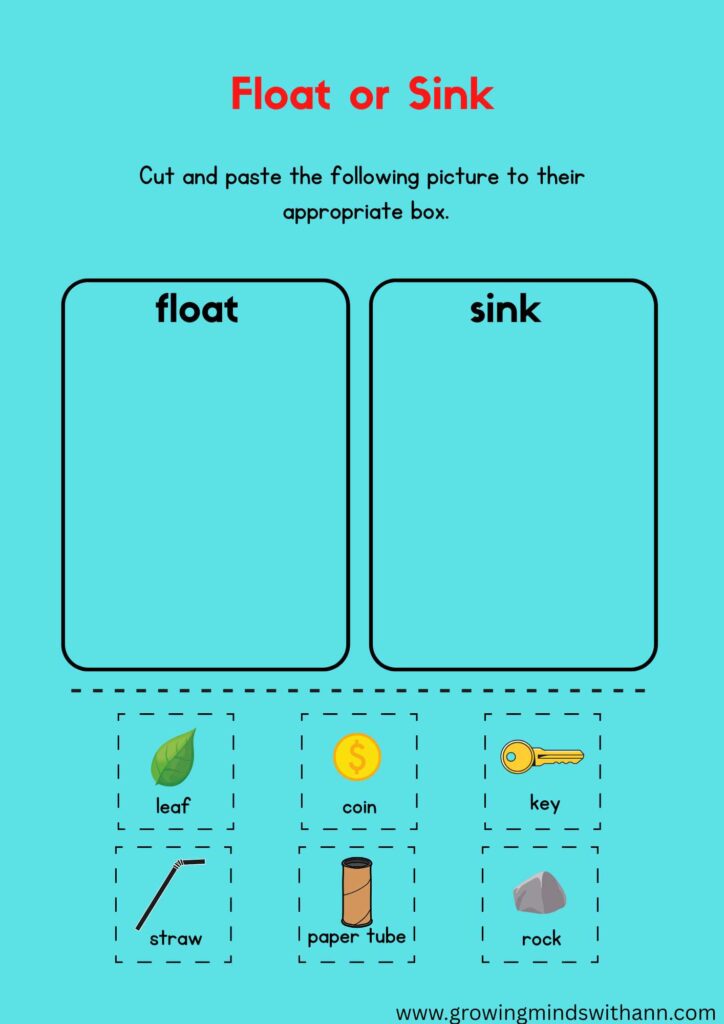
To get started, fill a bowl with water and gather things like leaf, key, rock, paper tube, straw or other everyday objects around the house. Before dropping each item into the water, ask your child, “Do you think this will sink or float?” They can also use the printable below to place the objects at the right place after the experiment.
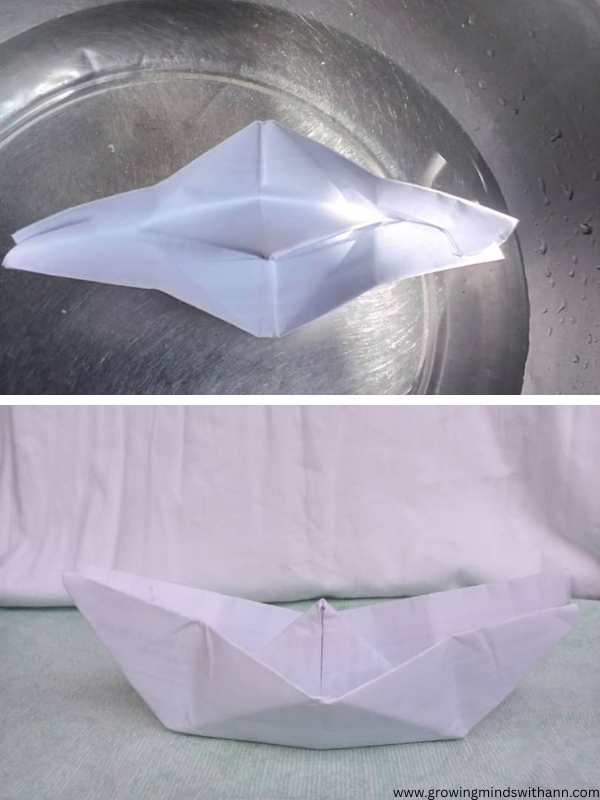
3. Paper Boat
The paper boat activity is a hands-on activity that keeps kids curious and engaged while learning through play. It is a simple and fun way to introduce kids to STEM using everyday materials. With just a sheet of paper, children can create a boat and test whether it floats on water.
Materials Needed
4. Oil and Water Experiment
Kids are often surprised when they see that oil and water don’t mix, no matter how much the jar is shaken. This often sparks curiosity and opens the door to learning.
Through this experiment, children begin to understand that not all liquids behave the same way. Watching the oil separate and float on top of the water helps them grasp basic science ideas in a very visual and hands-on way. It also encourages observation, patience and thoughtful questioning as kids try to figure out why the liquids separate.
Materials Needed
- Transparent cup or jar
- water
- oil

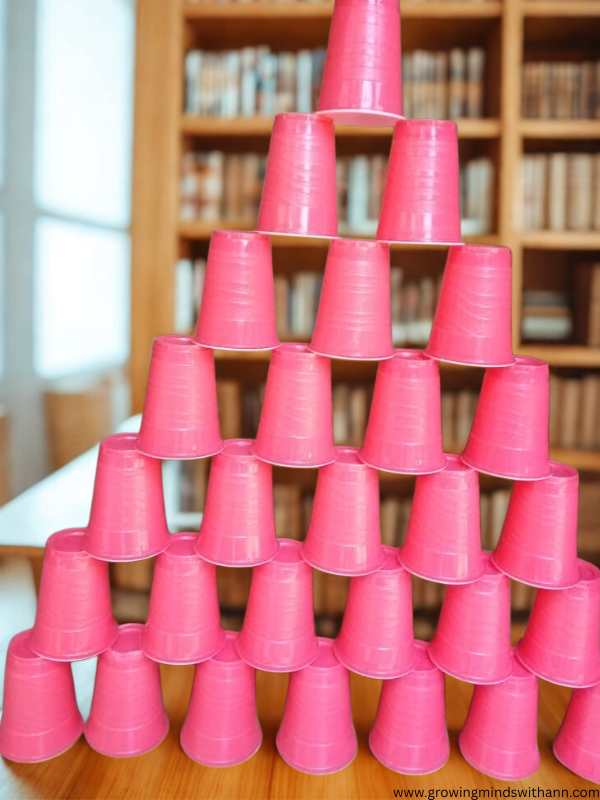
5. Cup Tower Challenge
This is a simple activity that turns everyday play into a fun learning experience. It involves stacking cups, focus, patience and a bit of strategy to keep the tower from falling.
As children build and rebuild their towers, they start thinking about balance, stability and structure. When the tower tumbles over, they don’t see it as failure rather as a chance to try again. This helps kids develop problem-solving skills, resilience and confidence in their ability to improve.
Materials Needed
Conclusion
These 5 simple STEM activities for kids offer more than just fun, they help children build curiosity, confidence and problem-solving skills through hands-on activities. When parents allow their children to engage in these activities, kids learn to explore their environment, think creatively and also understand how the world around them works.
You can also visit 10 easy DIY Christmas ornament for kids.