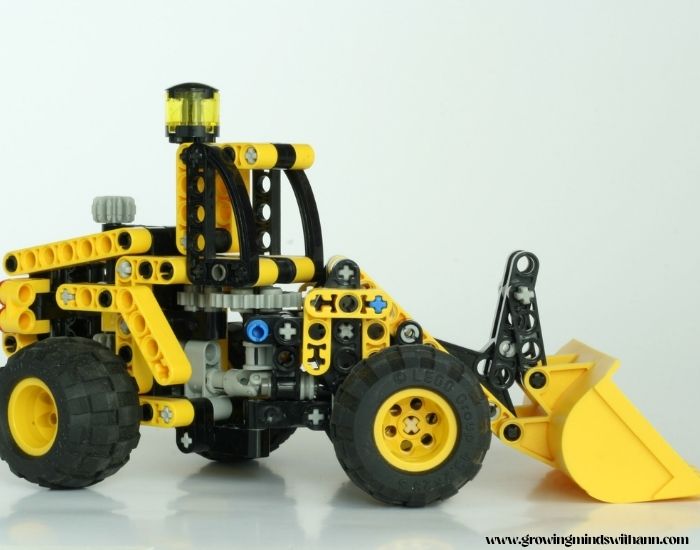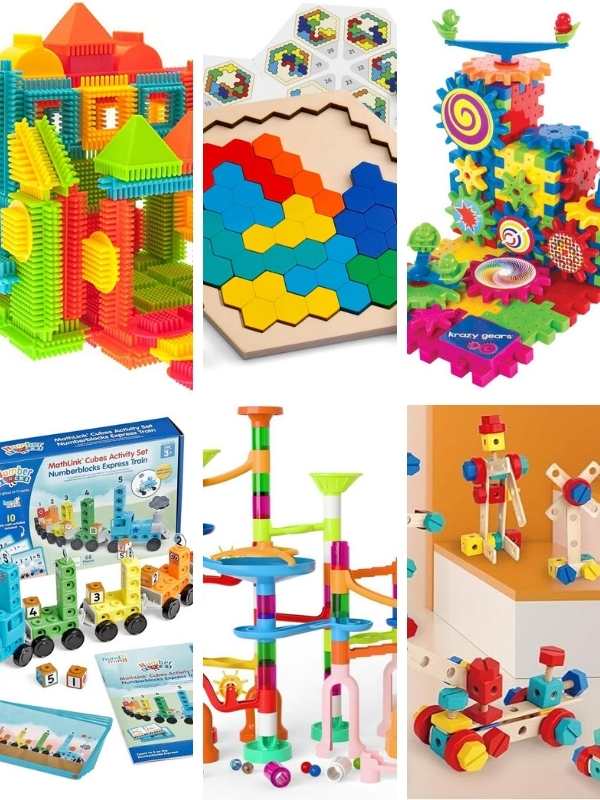
Explore STEM toys for hands-on learning, fun, educational toys that build creativity, problem-solving, math, science, and engineering skills.
Whenever you set out to buy toys for your children, it is always worth thinking beyond the fun they will have while playing. Of course, we want our kids to enjoy their toys, but it is even better when those toys can entertain them while helping them learn something valuable along the way.
Children learn so much through play. The right toys can help them develop important skills such as creativity, communication, critical thinking, coordination, and problem-solving. They can also introduce children to ideas that support their educational journey without making learning feel like another classroom lesson.
This is one of the reasons I love STEM toys. It combines science, technology, engineering, and mathematics with hands-on play. This gives children opportunities to explore, build, experiment, and figure things out for themselves. As they play, they also learn how things work, try new ideas, make mistakes, and find solutions.
As a teacher and mom, I have seen how much children enjoy activities that allow them to use their hands and their imagination. Sometimes, a child may learn more from building a simple structure, creating a pattern, or solving a little challenge than they would from simply memorizing information.
In this article, we will look at the importance of STEM toys and explore different STEM toys kids actually love for hands-on learning. I’ll also share ideas based on different age groups, so you can choose toys that are enjoyable while still supporting your child’s development.
And if you are looking for more thoughtful gift ideas, you may also enjoy my articles on non-toy gift ideas for elementary kids and the best educational toys for toddlers and preschoolers. There are plenty of simple ways to choose gifts that bring joy while giving our children opportunities to learn, grow, and discover something new.
What Are STEM Toys?
Before we dive into the different types of STEM toys, it is important to first understand what they actually are. Once you know what makes a toy a STEM toy, it becomes much easier to recognize good options when you are shopping for your child.
STEM stands for Science, Technology, Engineering, and Mathematics. STEM toys are therefore toys designed to introduce children to these areas through hands-on play, exploration, and problem-solving. Instead of simply pressing a button and watching something happen, children are often encouraged to build, create, test, observe, and figure things out on their own.
When you are trying to figure out if a toy is truly a STEM toy, here are some simple signs to look for:
- Toys that encourage your children to actively do something like building, assembling, or experimenting rather than just watching or pressing a single button.
- The toy gently challenges your children to think, test ideas, and figure out how it works.
- There is no single correct outcome, so children can explore different possibilities each time they play.
- It naturally leads children to ask questions like “What happens if I do this?” or “Why did that change?”
- Toys that introduce simple concepts such as balance, patterns, movement, measurement, or cause and effect.
You can also see 15 Apple crafts for kids that are fun and easy
Importance of Hands-On Learning for Kids
Hands-on learning gives children the chance to learn by doing, exploring, and discovering things for themselves.
Below are some of the importance:
- Hands-on learning builds confidence and independence in kids.
- It encourages curiosity and exploration among kids.
- It helps them develop creativity and imaginative and critical thinking.
- Strengthens problem-solving skills
- Supports fine motor skills and coordination
- Helps children understand concepts more easily
- Encourages patience and persistence
- Makes learning more memorable
- Promotes active participation
- Helps children learn from mistakes
- Connects learning to real-life experiences
20 Best STEM Toys Kids Actually Love for Hands-on Learning
1. Coding Robots for Beginners
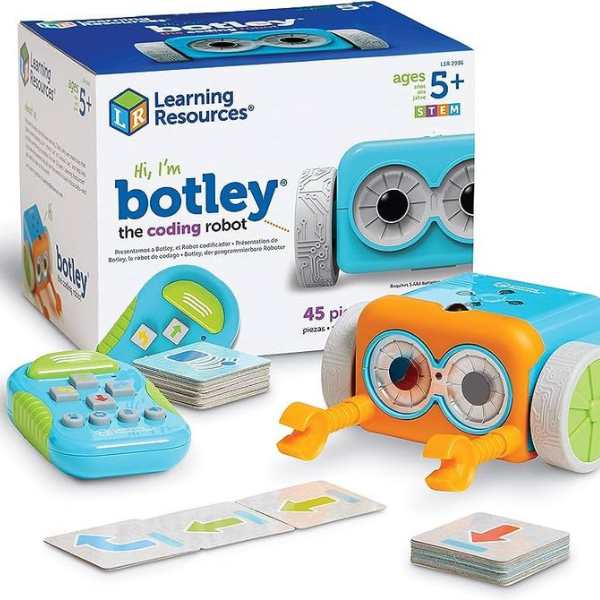
Coding robots are a fun way to introduce children to basic coding and logical thinking without making learning feel complicated. Kids can give the robot simple commands, create movement patterns, and watch their instructions come to life.
As they play, children learn about sequencing, cause and effect, problem-solving, and following directions. They also get to experiment, make mistakes, and try again, which makes coding feel more like an exciting challenge than a lesson.
For younger children, look for beginner-friendly robots with simple buttons, picture-based commands, or drag-and-drop coding features. These are great for building confidence before children move on to more advanced coding activities.
2. Marble Run Construction Sets
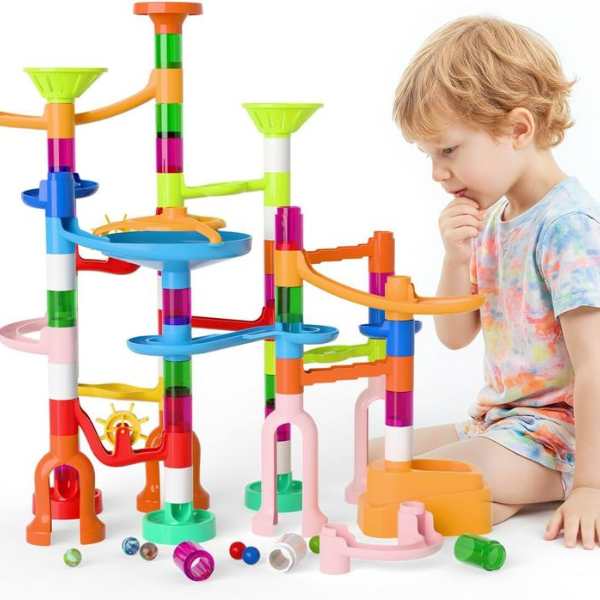
Marble run sets are a simple and exciting way for children to explore how movement, gravity, speed, and balance work. Kids build tracks using different pieces and then release a marble to see what happens.
As they build, children learn to plan, test their ideas, and make changes when the marble does not move as expected. It is a lovely hands-on activity that encourages creativity, patience, and problem-solving while keeping little hands busy.
If you are looking for other ways to keep your toddlers busy, this masking tape activities for toddlers will give you insights
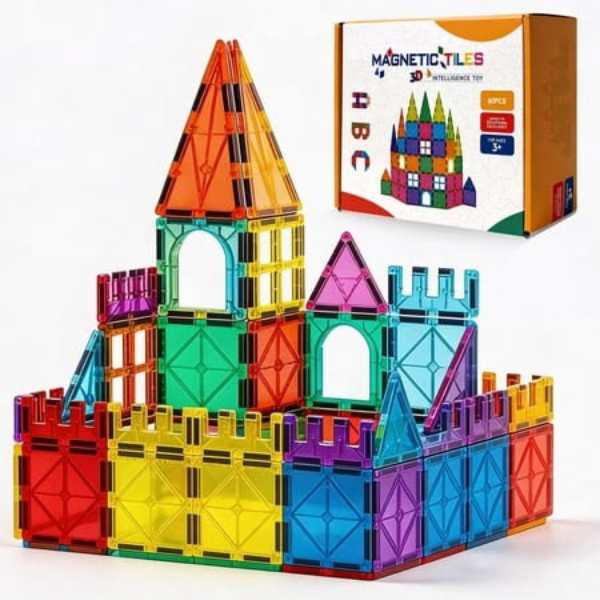
3. Magnetic Tiles
Magnetic tiles are a wonderful STEM toy for children who love to build and create. The colorful pieces connect easily with magnets, allowing kids to make houses, towers, shapes, and all kinds of imaginative structures.
As children build, they begin to explore simple ideas about shapes, balance, patterns, and stability. They also learn to plan, experiment, and solve problems when their structures do not work the first time.
Because there is no single right way to play with magnetic tiles, they encourage both hands-on learning and creativity while keeping children happily engaged.
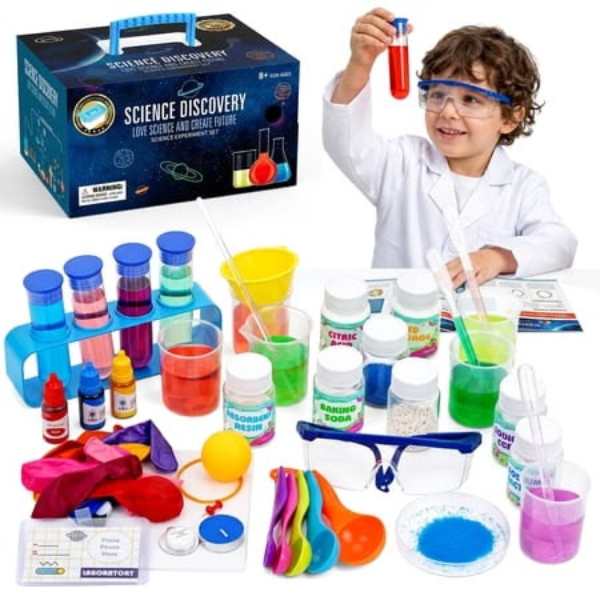
4. Science Experiment Kits
Science experiment kits give children a fun way to explore how the world around them works. With simple, age-appropriate experiments, kids can observe changes, ask questions, make predictions, and discover what happens.
These kits encourage curiosity while building early skills in observation, critical thinking, and problem-solving. They also show children that science is not just something they read about, it is something they can explore with their own hands.
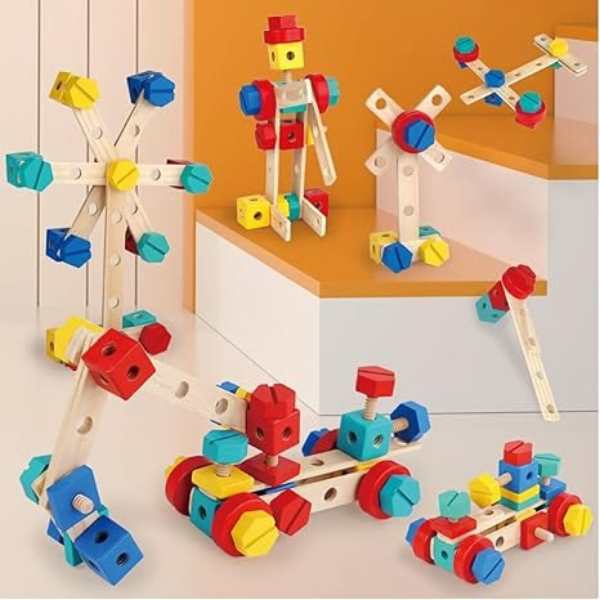
5. Wooden Nut and Bolt Building Toy
Wooden nut and bolt toys are a simple hands-on way for children to practice building while strengthening their fine motor skills. Kids can twist, match, and connect the different pieces to create simple structures.
As they play, children learn about shapes, sizes, patterns, and how different pieces fit together. It also encourages patience, concentration, coordination, and problem-solving in a way that feels just like play.
Looking for other hands-on activities? see Popsicle stick match activities.
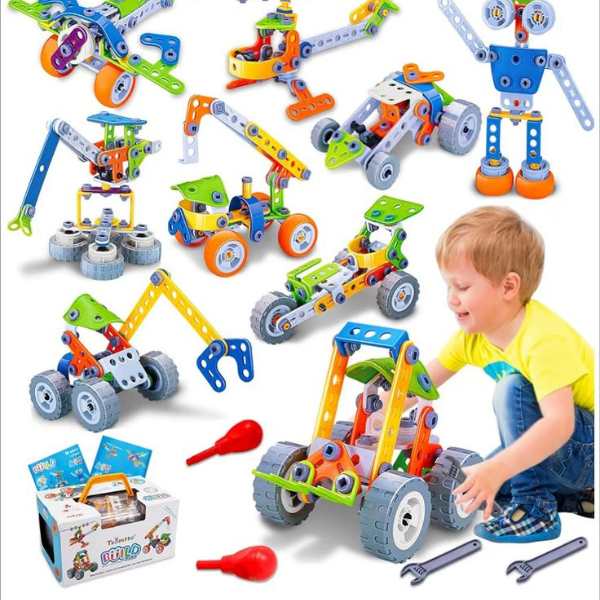
6. 10-in-1 Building Toy
A 10-in-1 building toy gives children different ways to build, create, and explore using the same set of pieces. They can follow simple designs or use their imagination to make something completely new.
As children assemble and take apart the models, they practice following instructions, problem-solving, spatial awareness, and fine motor skills. It is also a great choice for kids who enjoy variety because one toy can provide many different building challenges.
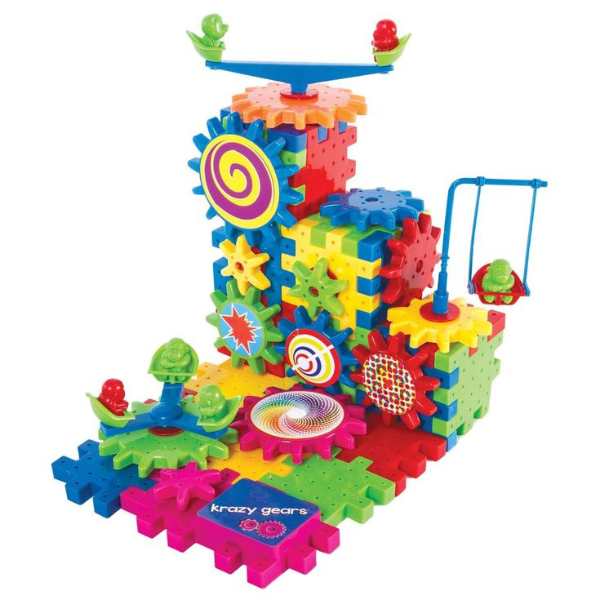
7. Gear Building Toys
Gear building toys are a fun way for children to discover how movement and simple machines work. Kids can connect the gears, turn them, and watch how one gear makes another move.
While playing, children explore cause and effect, patterns, movement, and problem-solving. They also strengthen their hand coordination and learn that sometimes a little trial and error is part of figuring things out.
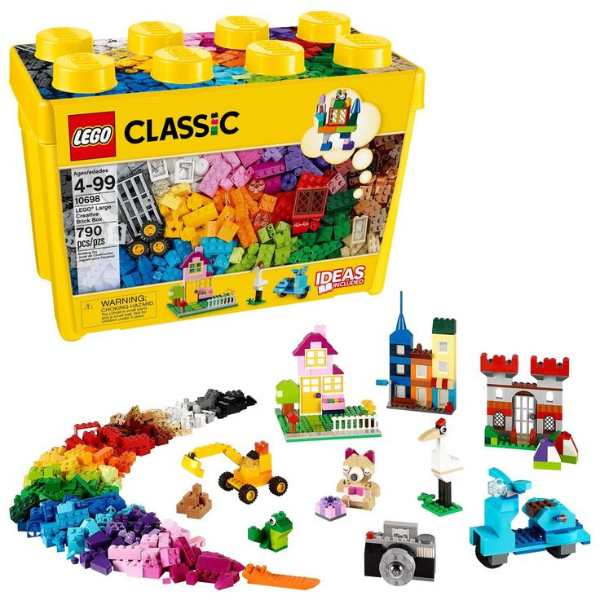
8. Building Block Engineering Sets
Building block engineering sets give children the freedom to build, take apart, and try again. They can create bridges, vehicles, towers, and other structures while exploring how different pieces work together.
As they build, children develop spatial awareness, creativity, planning, and problem-solving skills. They also learn that getting something wrong is simply part of figuring out how to make it work better.
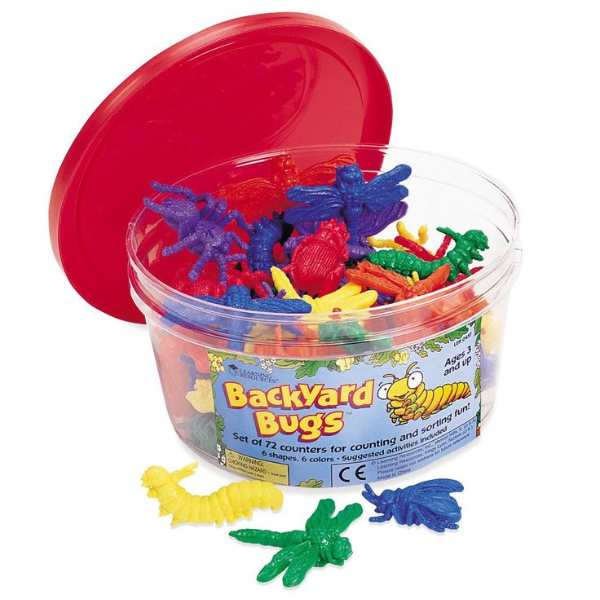
9. Backyard Bug Container
Children are naturally curious about the little creatures they find outdoors, making this kind of toy a fun way to bring STEM learning into everyday play. Kids can collect, sort, count, and observe pretend bugs while learning about numbers, patterns, and the natural world.
It also encourages careful observation and curiosity as children begin to notice differences between insects. For little learners, it is a simple and playful way to introduce early science and mathematics skills.
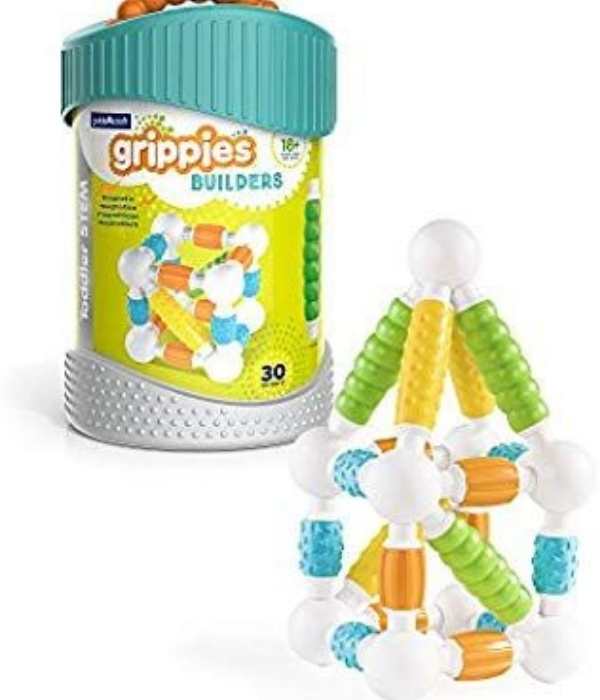
1o. Grippies Builders
This hands-on building toy gives children an easy way to connect colorful pieces and create different structures. The pieces are designed for little hands, making them especially enjoyable for younger children who are just beginning to explore construction.
As they build and rebuild, children practice fine motor skills, hand-eye coordination, spatial awareness, and simple problem-solving. It is a lovely choice for curious little learners who enjoy making things with their hands.
You may also see Fish bone straw threading activity.
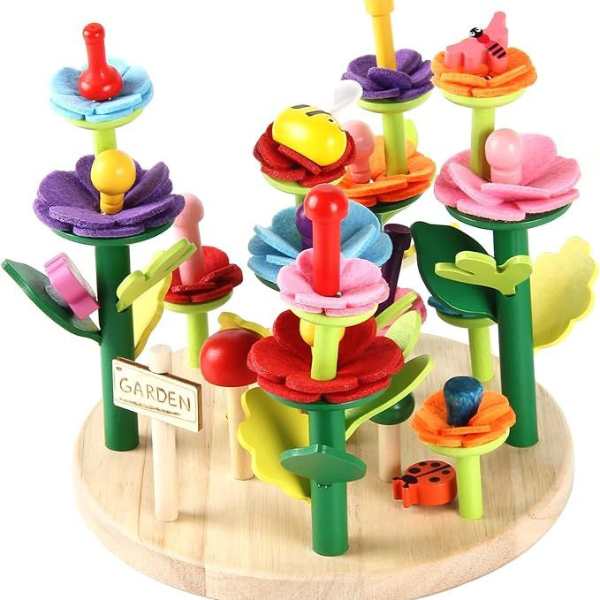
11. Flower Garden Building Stacking Toy
This colorful toy gives young children a playful way to build their own little flower garden by stacking and connecting the pieces. As they create different flowers, they can explore colors, shapes, sizes, and simple patterns.
The activity also helps strengthen fine motor skills, hand-eye coordination, and early problem-solving. It is a sweet choice for little learners who enjoy building while using their imagination.
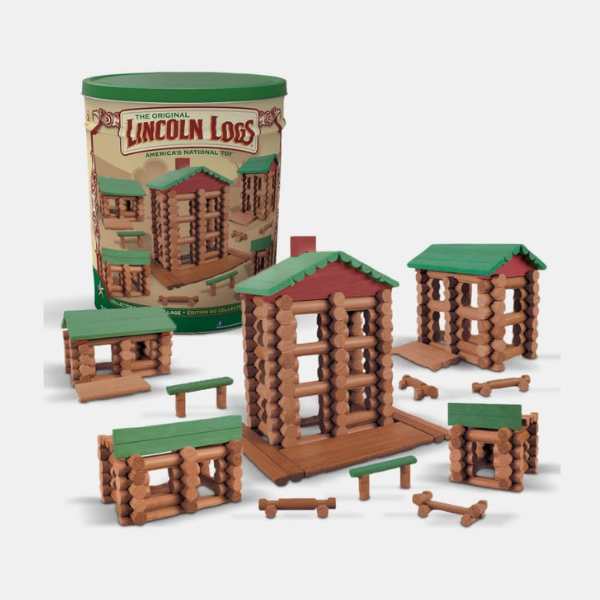
12. Lincoln Logs
There is something special about a toy that lets children build a little world entirely with their own hands. Lincoln Logs allow kids to connect notched wooden pieces to create cabins, houses, and other structures.
As they build and rebuild, children explore balance, structure, spatial awareness, and simple engineering concepts. They also practice patience, creativity, and problem-solving while enjoying open-ended play.
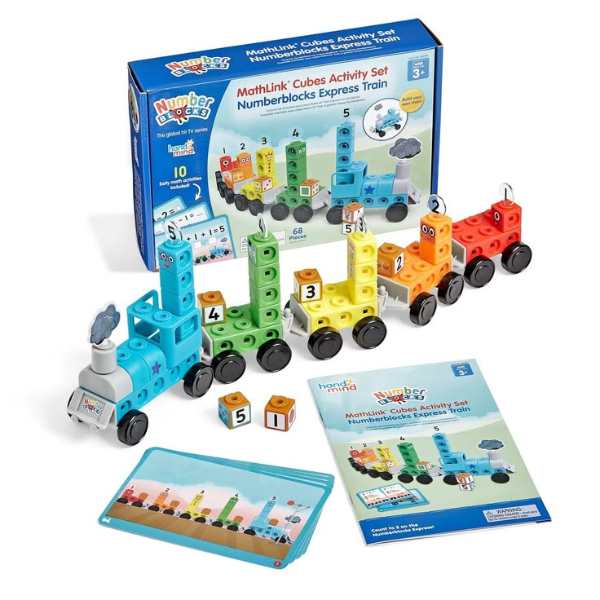
13. Numberblocks MathLink Cubes Activity Set
This activity set makes early math feel like play as children connect the cubes to build Numberblocks and explore numbers from 1 to 10. Kids can practice counting, number recognition, simple addition, and number relationships while using their hands.
It is a lovely choice for young learners because the colorful pieces make abstract number concepts easier to see and understand. Children can build, count, take apart, and try again while developing confidence with early math skills.
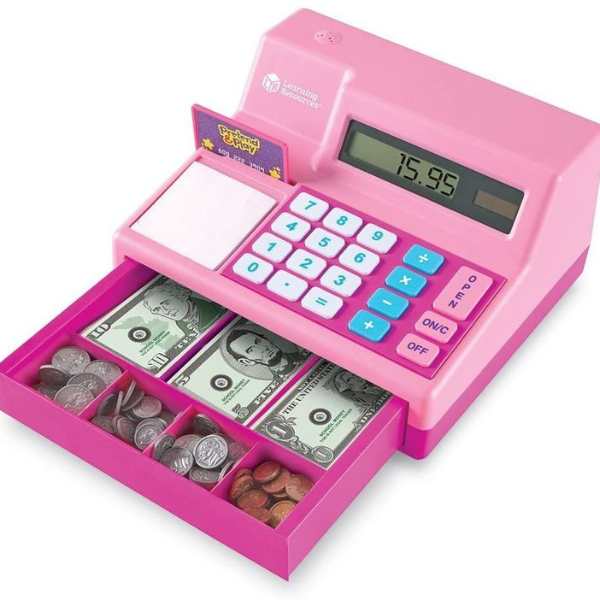
14. Pretend & Play Calculator Cash Register
Pretend play becomes a simple math lesson when children use a cash register to play shopkeeper or cashier. They can count pretend money, enter numbers on the calculator, and practice simple addition and subtraction as they play.
It also helps children connect math to everyday situations. Along the way, they build number confidence, problem-solving skills, and social skills while enjoying imaginative play.
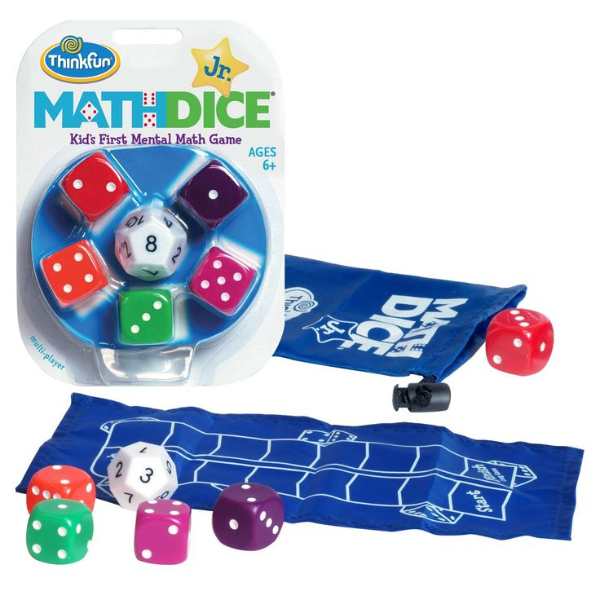
15. ThinkFun Math Dice Jr.
This fun math game gives children a playful way to practice addition, subtraction, counting, and number recognition. Kids roll the dice, use the numbers they get, and try to reach the target number.
It encourages children to think quickly, try different combinations, and build confidence with numbers. Because it feels like a game rather than a lesson, it can make early math practice more enjoyable.
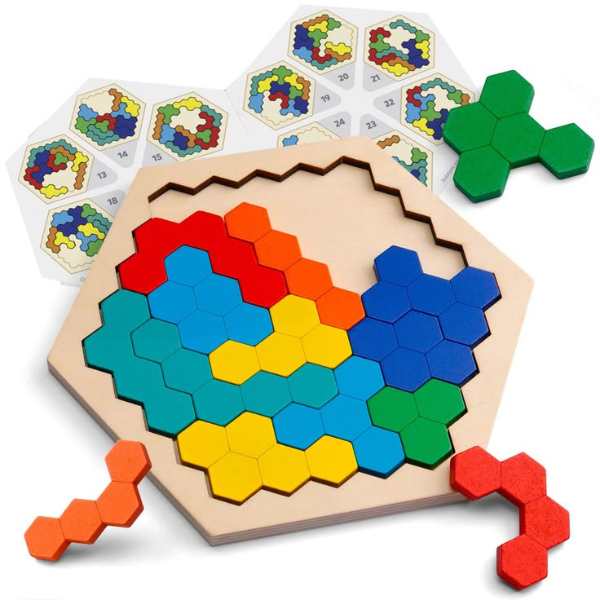
16. Hexagon Brain Teasers Puzzle
This puzzle gives children a fun challenge as they fit hexagon-shaped pieces together and work out how the different parts connect. It encourages them to look closely, think ahead, and try different solutions.
As they solve each puzzle, children develop spatial awareness, logical thinking, concentration, and problem-solving skills. It is a simple screen-free activity that can keep young minds happily engaged.
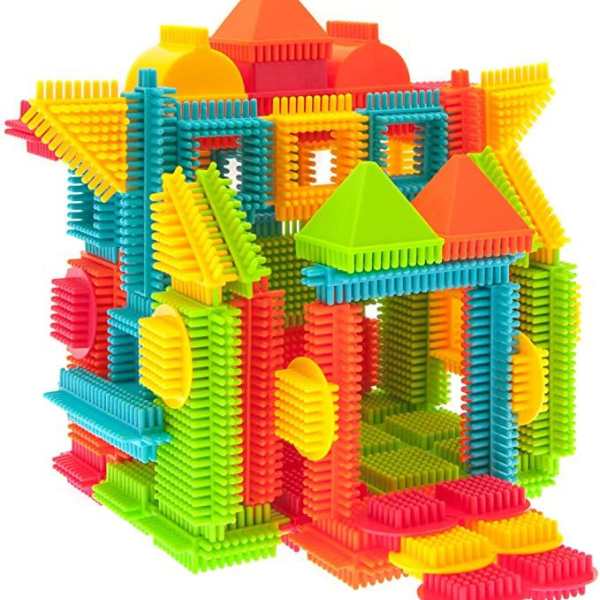
17. Interlocking Building Blocks Construction Toy Set
This construction set gives children plenty of opportunities to build, connect, and create using interlocking pieces. They can make houses, vehicles, towers, or anything else their imagination comes up with.
As children fit the pieces together, they practice fine motor skills, spatial awareness, creativity, and problem-solving. It is also a lovely open-ended toy because there is always something new to build.
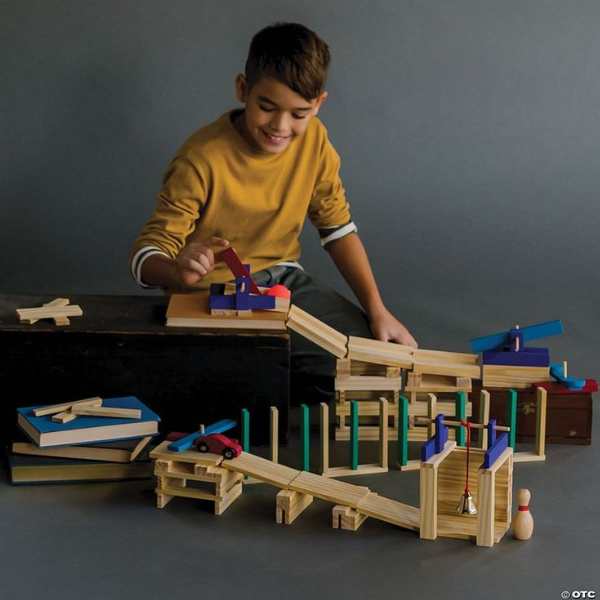
18. Contraptions Reactions Planks Building Toy
This building toy lets children create their own chain reactions using planks and other pieces. They can arrange the parts, set them in motion, and watch how one action causes another to happen.
As they experiment, children learn about cause and effect, sequencing, balance, and simple physics. It also encourages planning, patience, and problem-solving as they adjust their designs and try again.
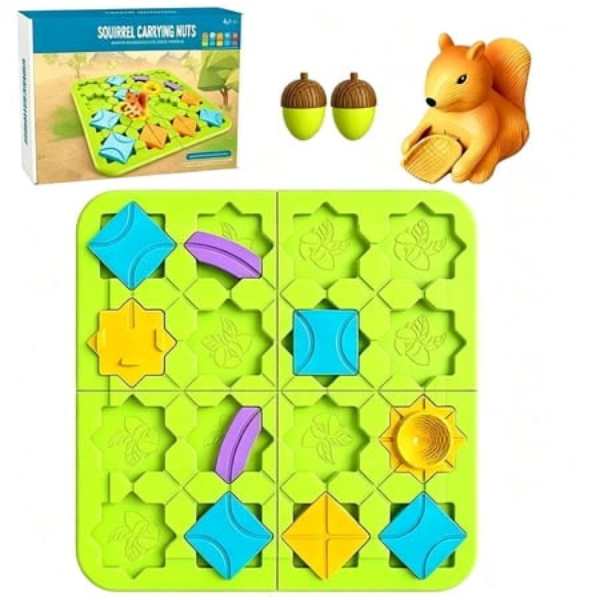
19. Squirrel Logic Track
This fun logic game challenges children to plan a path and work out how to get the squirrel to the right place. They must think carefully, test different moves, and find a solution to each challenge.
As they play, children build logical thinking, spatial awareness, concentration, and problem-solving skills. It is a playful way to help kids learn that sometimes solving a problem takes a little patience and a few tries.
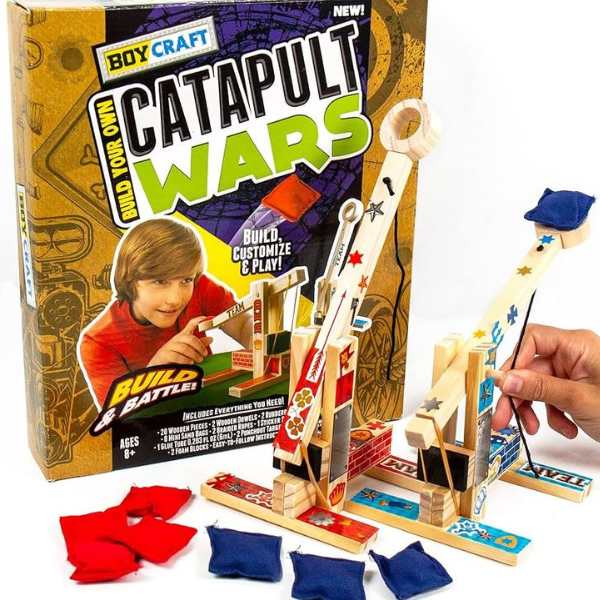
20. Catapult Wars
This building and engineering game lets children create simple catapults and test how far their objects can travel. They can experiment with different angles, positions, and amounts of force to see what changes the result.
As they play, children explore basic ideas about motion, force, distance, and cause and effect. It also encourages planning, problem-solving, and learning through trial and error while keeping STEM play exciting.
STEM Toys by Age Group
Children develop different skills at different stages, so choosing a STEM toy that matches their age can make learning more enjoyable and less frustrating.
Here are some of the toys we discussed and the age groups they are generally best suited for.
Ages 2–4
For younger children, focus on simple toys that support counting, building, matching, and fine motor development.
- Flower Garden Building Stacking Toy
- Grippies Builders
- Numberblocks MathLink Cubes Activity Set
- Wooden Nut and Bolt Building Toy
- Counting and sorting toys
- Simple Interlocking Building Blocks
These toys give little hands plenty of opportunities to build, stack, count, connect, and explore.
Ages 4–6
At this stage, children are ready for toys that introduce more problem-solving and early engineering concepts.
- Magnetic Tiles
- Lincoln Logs
- Building Block Engineering Sets
- Pretend & Play Calculator Cash Register
- ThinkFun Math Dice Jr.
- Hexagon Brain Teasers Puzzle
- Interlocking Building Blocks Tiles Construction Toy Set
These activities encourage children to experiment with shapes, numbers, structures, patterns, and simple challenges.
Ages 6–8
Older children can begin exploring toys that involve more planning, logic, and hands-on experimentation.
- Gear Building Toys
- Marble Run Construction Sets
- Contraptions Reactions Planks Building Toy
- Squirrel Logic Track
- Catapult Wars
- Science Experiment Kits
- 10-in-1 Building Toy
These toys encourage children to think ahead, test their ideas, and understand simple concepts such as force, motion, balance, and cause and effect.
Ages 8–12
Children in this age group can usually handle more challenging STEM activities that require patience, planning, and problem-solving.
- Coding Robots for Beginners
- Advanced Building Block Engineering Sets
- More challenging Science Experiment Kits
- Marble Run Construction Sets
- Catapult Wars
- Gear Building Toys
- Hexagon Brain Teasers Puzzle
These toys can help children develop stronger logical thinking, creativity, engineering skills, and confidence as they tackle more complex challenges.
How to Choose the Right STEM Toy for Your Child
Choosing a STEM toy is simple when you focus on your child’s needs and interests. Below are the thing you need to put into consideration before purchasing STEM toys for your kids
- Consider your child’s age and pick toys that match their developmental stage.
- Follow what your child enjoys, such as building, experimenting, or exploring.
- Choose toys that encourage hands-on activities like building, testing, or creating.
- Make sure the difficulty level is balanced so it is not too easy or too frustrating.
- Pick open-ended toys that allow different ways of playing.
- Look for toys that help develop skills like problem-solving, creativity, and logic.
- Always check safety details such as age recommendations and small parts warnings.
- Choose durable toys that can be used repeatedly without breaking easily.
- Do not focus only on price because simple toys can also be very educational.
- Select toys that your child is genuinely excited to use and play with.
Simple Ways to Make STEM Play More Engaging at Home
You do not need a special classroom or complicated setup to make STEM play exciting at home. A few simple changes can turn everyday play into a fun learning experience.
- Let your child choose what they want to build or explore.
- Ask questions that encourage them to think, such as “What do you think will happen?”
- Give them time to experiment without rushing to help.
- Let mistakes become part of the learning process.
- Join in and play together when they need encouragement.
- Connect STEM toys to everyday activities and things they see around them.
- Encourage children to explain how they built or solved something.
- Add small challenges to make familiar toys more interesting.
- Celebrate effort and persistence, not just getting the right answer.
- Keep STEM play fun and relaxed rather than turning it into another lesson.
Frequently Asked Questions
What age should children start playing with STEM toys?
Children can start exploring STEM concepts from a very young age. Simple stacking, counting, building, sorting, and shape toys can introduce STEM skills to toddlers and preschoolers.
Are STEM toys only for older children?
Not at all. There are STEM toys for toddlers, preschoolers, school-age children, and even teenagers. The important thing is choosing a toy that matches your child’s age and abilities.
Do STEM toys really help children learn?
Yes. Hands-on STEM toys can give children opportunities to practice skills such as problem-solving, logical thinking, creativity, counting, coordination, and planning while they play.
Are expensive STEM toys better?
Not necessarily. You do not need to spend a lot of money to give your child meaningful STEM experiences. Simple building blocks, puzzles, counting toys, and household materials can encourage plenty of learning.
Can STEM toys be used without adult help?
Many STEM toys are designed for independent play, especially as children get older. However, younger children may need some guidance, and playing together can make the experience even more enjoyable.
What if my child does not like STEM toys?
Do not worry. Every child has different interests. Try finding a STEM toy that connects with something your child already enjoys, such as animals, art, building, numbers, or pretend play.
How often should children play with STEM toys?
There is no perfect amount of time. Even short, regular play sessions can be valuable. What matters most is giving children opportunities to explore, experiment, and enjoy the learning process.
Can STEM toys replace school learning?
STEM toys are not a replacement for school or other forms of learning. Instead, they complement learning by giving children a hands-on way to explore ideas and practice useful skills outside the classroom.
Should I choose STEM toys based on age or ability?
Both matter. Age recommendations are a helpful starting point, but your child’s interests, confidence, and developmental level should also guide your choice.
Do boys and girls enjoy STEM toys equally?
STEM toys are for all children. Rather than choosing toys based on gender, focus on what your child enjoys and the skills you would like them to explore.
Conclusion
STEM toys can be so much more than something to keep children busy. With the right toy, play can become an opportunity to build, experiment, count, create, and solve little problems along the way.
You do not need to fill your home with expensive toys. A simple set of building blocks, a counting game, or a hands-on puzzle can give your child valuable opportunities to learn. What matters most is choosing something that matches their age, interests, and abilities.
Most importantly, let your child enjoy the process. Let them make mistakes, try again, ask questions, and come up with their own ideas. Those little moments of discovery are often where real learning begins.