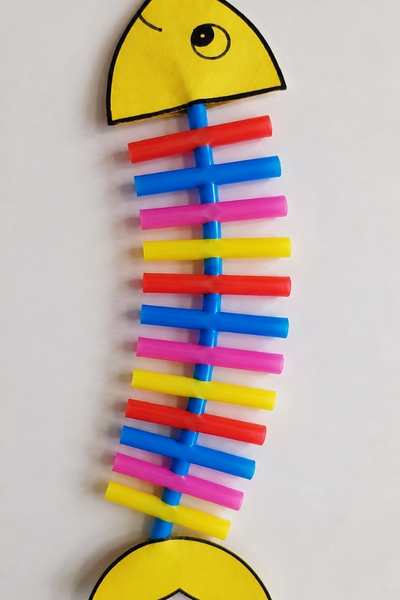
Fish Bones Straw Threading Activity for Toddlers is a fun and simple ocean-themed activity that turns colorful straws and a paper fish into a hands-on learning experience for little ones. In this activity, toddlers can take something as ordinary as drinking straws and transform them into a creative fish craft while practicing important skills like threading, grasping, and making patterns.
Little hands are naturally curious, and activities that allow children to touch, arrange, and create often become their favorite moments of the day. This fish bones straw threading activity gives children the chance to explore at their own pace while strengthening their little hands and building confidence with every piece they place.
It is a playful invitation to learn, create, and dive into an imaginary underwater world. I love the excitement on their faces whenever they complete their little fish.
In this post, you will discover how to set up a fish bones straw threading activity for toddlers. The materials you need, simple preparation steps, and helpful tips to make the activity enjoyable and age-appropriate. From creating the fish template to choosing the right materials for little hands, I will walk you through everything you need to prepare this engaging activity.
You will also learn how this playful craft can be extended into a fun learning experience that encourages creativity, fine motor development, and ocean-themed exploration for toddlers.
Advantages of Fish Bones Straw Threading Activity for Toddlers
The following are some of the benefits your little one will derive from participating in this activity.
1. Strengthens Fine Motor Skills
One of the biggest benefits of the fish bones straw threading activity is the way it helps strengthen toddlers’ fine motor skills. Holding small straw pieces, positioning them carefully, and pushing them into the correct spaces all require the use of the tiny muscles in their fingers and hands. These movements help prepare children for future tasks like holding pencils, using scissors, zipping clothes, and managing other daily activities that require hand control.
2. Improves Hand-Eye Coordination
Placing the straw pieces along the fish bones requires focus, patience, and careful movements. With practice, children become more confident in controlling their hands and completing tasks that involve accuracy.
3. Encourages Creativity and Self-Expression
Every little fish created during this activity can look completely different, and that is part of the fun. Toddlers can choose their favorite straw colors, create simple patterns, or decorate their fish in their own unique way.
4. Supports Early Learning Through Colors and Patterns
The fish bones straw threading activity is a great way to introduce early learning concepts in a natural way. As children sort straw pieces by color, repeat patterns, or count how many pieces they use, they begin exploring early math skills without feeling like they are doing a lesson.
5. Builds Concentration and Patience
Toddlers are still learning how to stay focused on a task, and activities like this give them a gentle opportunity to practice. Threading and arranging straw pieces takes time and attention, encouraging children to slow down and complete each step.
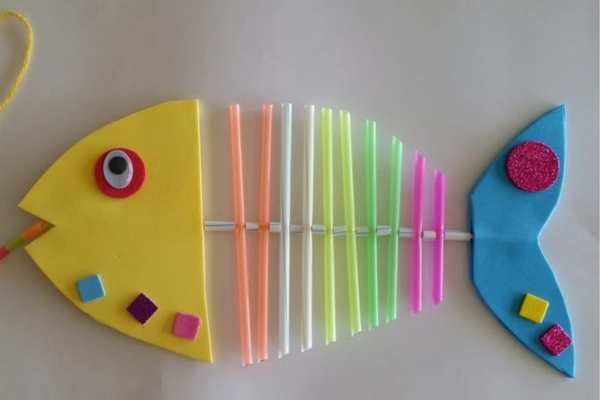
Materials Needed for Fish Bones Straw Threading Activity
The following are the materials you will need for this activity:
- Cardstock or paper for fish head and tail
- Colorful drinking straws
- Child-safe scissors
- Glue
- Markers for decorating the fish
- Hole puncher
- Yarn or thread
How to Make Fish Bones Straw Threading Activity
Step 1: Prepare the Fish Template
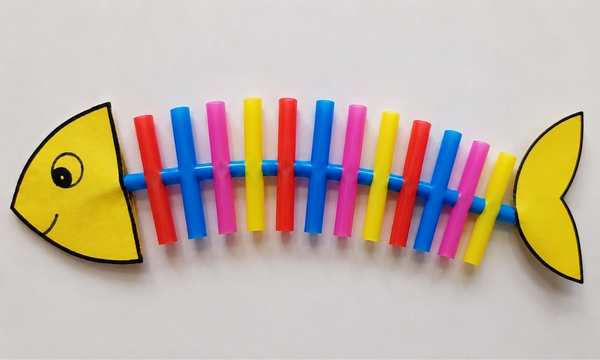
Draw a simple fish shape on a piece of cardstock or thick paper. Cut out the head and the tail. Get a thread or a long straw and hold it with a glue to the center of the head of the fish. Make the fish large enough for little hands to work on comfortably.
Step 2: Cut the Straws Into Small Pieces
Take your colorful drinking straws and cut them into small sizes. Mix different colors to make the fish look more playful and gives toddlers the chance to make their own choices.
If you are doing this activity with older preschoolers, they can help with cutting using child-safe scissors with adult guidance.
Step 3: Create the Threading Path
Depending on how you want to set up the activity, you can create a simple placement activity by letting toddlers arrange the straw pieces along the thread lines. For a more hands-on threading experience, use a hole puncher to make small holes on the straws.
Step 4: Let Toddlers Thread and Decorate Their Fish
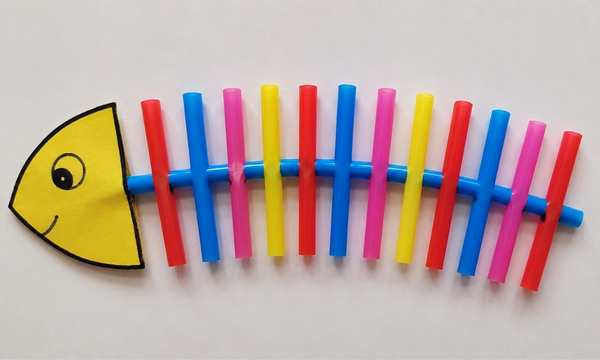
Invite your toddler to place the straw pieces along the thread as fish bones, choose their favorite colors, and create their own unique fish design.
Some children may carefully follow the lines, while others may create colorful patterns or place the pieces wherever they like. That is the beauty of toddler activities; their creativity does not need to follow a set rule.
Once they finish threading with the straw, glue the tail you cut out to the long straw or thread depending on the one you used. Add any finishing touches such as paper waves, seaweed, stickers, or drawings to create a fun underwater scene.
Learning Activities You Can Add to Fish Bones Straw Threading Activity
You can easily turn fish bones straw threading activities into a richer learning experience by adding a few simple activities alongside it. These extra ideas encourage children to talk, count, observe, and think while they enjoy making their little fish. This makes learning to occur naturally through play, without making the activity feel like a lesson.
1. Color Recognition and Matching Activity
Use the colorful straw pieces as an opportunity to practice identifying and matching colors. Before starting the activity, ask your toddler to name the colors they see or sort the straws into different groups. You can also challenge them to match straw colors to specific parts of the fish or create a simple color pattern along the fish bones.
2. Counting Fish Bones
Turn the straw pieces into a simple counting activity by encouraging toddlers to count how many pieces they place on their fish. You can start with small numbers for younger children and gradually increase the challenge as they become more comfortable.
Counting aloud while they work helps children practice number recognition, one-to-one counting, and early math skills in a playful way.
3. Create Fish Patterns
Patterns are a great early math skill, and this activity provides the perfect opportunity to introduce them. Encourage your toddler to arrange the straw pieces in repeating sequences, such as blue-red-blue-red or yellow-green-yellow-green.
You can create the first few pieces and ask your child what color should come next. This simple game helps develop observation skills, logical thinking, and problem-solving abilities.
4. Learn About Fish and Ocean Animals
While your toddler is creating their fish, take the opportunity to talk about the underwater world. Share simple facts about fish, such as where they live, how they swim, and what other animals they might see in the ocean.
These conversations help build vocabulary and spark curiosity about the world around them.
5. Sensory Ocean Play Extension
Extend the activity by creating a small ocean-themed sensory play area. Add blue fabric or paper as water, toy sea animals, shells, or other safe materials your child can explore.
After making their straw fish, toddlers can use it in pretend play, creating an underwater world where their fish can swim and explore. This combination of crafting and sensory play makes the experience even more engaging.
7. Fine Motor Practice With Sorting and Transferring
Before or after creating the fish, invite toddlers to transfer straw pieces using their fingers, or a small scoop. They can sort them by color, size, or length before adding them to their fish.
These small movements continue to strengthen hand muscles and improve coordination while keeping the play experience enjoyable.
You may also see:
DIY Sand Tattoos: A Simple Beach Crafts For Kids