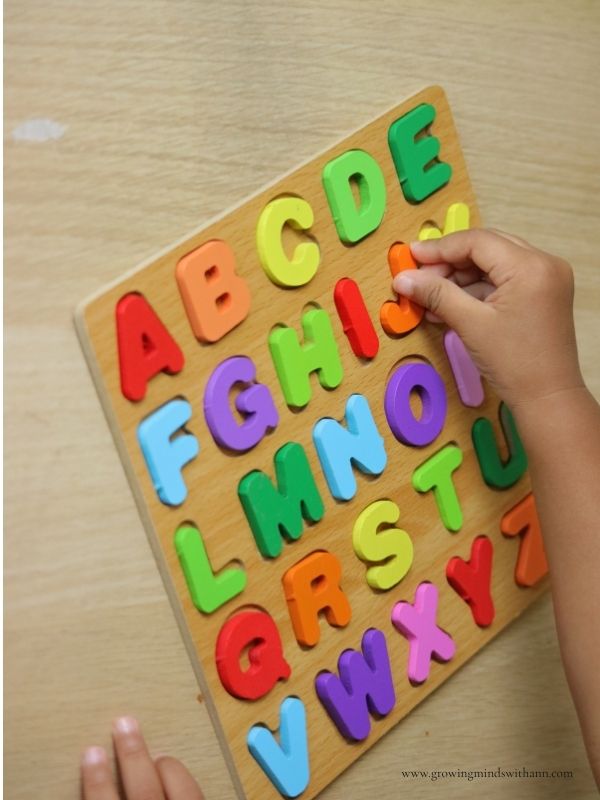
Discover fun ways to teach the alphabet to preschoolers with hands-on games, puzzles, and playful activities that build letter recognition, early literacy skills, and a love for learning.
If you’ve ever sat with your preschooler and watched them proudly shout, “That’s the letter A!” after weeks of pointing it out together, then you know just how rewarding those little learning moments can be. Teaching your children the alphabet does not necessary mean getting them to memorize the 26 letters as quickly as possible. It involves helping them to identify the letters everywhere they see it.
I have come to realize that children learn the alphabet best when they are having fun. Preschoolers are naturally curious, and turning letter learning into games, crafts, songs, and hands-on activities keeps them engaged without making it feel like a lesson. The smiles, laughter, and excitement they show while learning help them to remember the letters themselves.
Helping your child learn the alphabet early gives them a strong foundation for reading. As they begin to recognize letters and connect them with their sounds, they’re better prepared to blend simple words and become confident early readers.
In this article, I will share some of my favorite fun ways to teach the alphabet to preschoolers that are easy to do at home or in the classroom. And if you are looking ahead to the next step in your child’s literacy journey, be sure to read my article on Preschool Reading Tips, where I share simple ways to help young children build confidence and develop a love for reading.
Fun Ways To Teach The alphabet To Preschoolers
1. Alphabet Matching
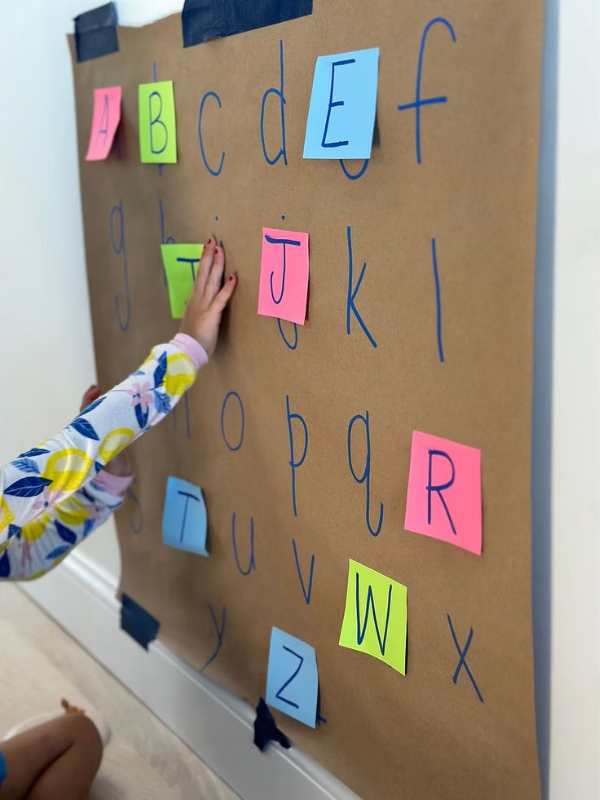
Alphabet matching is one of those simple, hands-on activities that can keep a preschooler happily engaged while quietly building an important early literacy skill. I love it because you don’t need anything fancy at all, just a marker, some sticky notes, and a little bit of time together can turn into a really meaningful learning moment.
Supplies Needed:
- A marker
- Sticky notes or small pieces of paper
- A flat surface or whiteboard
- Tape (if your sticky notes don’t stick well)
How to Set It Up:
Write uppercase letters directly on your board or flat surface using a marker. Space them out so your child has room to move and think between each one.
Then, take your sticky notes and write the same uppercase letters, one letter per sticky note. If you are working with older preschoolers who are ready for more challenge, you can also prepare lowercase letters instead of uppercase. You can even mix both once they are more confident.
For younger children, I recommend starting with just 5–8 letters at a time. This keeps things calm and prevents overwhelm. You can always rotate the letters as your child grows more comfortable.
How to Do the Activity:
In a simple and playful way tell your child to find the to find the letters and stick them in the right place.
Hand the child one sticky note at a time. Encourage them to look at the letter on the board and find its match.
As the child is searching, gently prompt them to say the letter out loud, by asking “What letter do you see? Can you say it with me?”
When they find the matching letter, let them stick it right on top of the one on the board. Celebrate the child and encourage them to keep going until all the sticky notes are placed.
You can also turn it into a fun little game by timing how long it takes to match all the letters. I love to keep it light and playful so that the children can stay more engaged and confident. If you need more hand-on activity for your child see, masking tape activities for toddlers that are easy and fun.
2. Sidewalk Chalk Alphabet
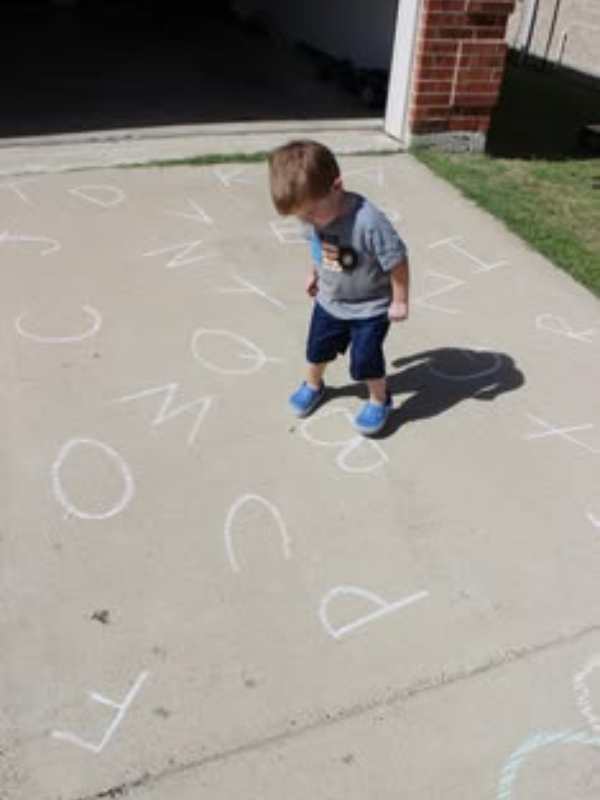
If your little one loves being outside, you can easily turn that outdoor time into a fun alphabet lesson. Sidewalk chalk is one of those simple activities that feels more like play than learning, which is exactly what we want at this age.
Supplies Needed:
- Chalk of different colors
- A safe, clean outdoor space
How to Set It Up:
Find a flat area where your child can move around comfortably. Using the chalk, write several large uppercase letters on the ground, leaving enough space between them for your child to step or jump from one letter to another.
For preschoolers who are just beginning to recognize letters, start with about 5–8 familiar letters. You can add more as their confidence grows.
If your child already knows most of the uppercase letters, mix uppercase and lowercase letters together.
How to Do the Activity
Start by walking around the letters with your child. Point to each one and say its name together.
Then make it a movement game. Call out a letter and have your child find it and jump on it.
You might say, “jump on the letter M?” Once they find it, celebrate their success and move on to another letter.
If you have younger children who aren’t ready to identify letters independently. Let them watch you, copy you, and repeat the letter names. Learning through repetition and play is still valuable.
For more outdoor activities see, fun screen-free snow day activities for toddlers.
3. Indoor Alphabet Hopscotch
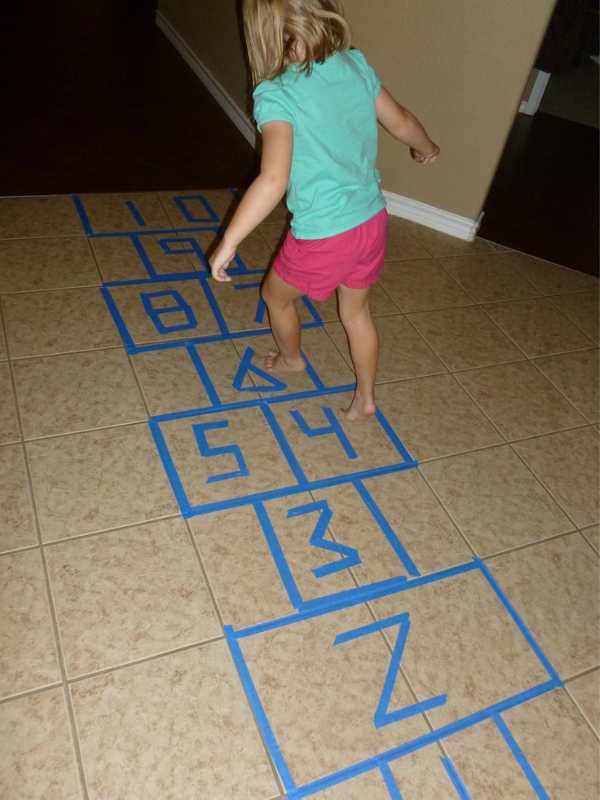
If your preschooler has lots of energy but the weather or space keeps you indoors, you can go for this activity. It is a perfect way to help them move and learn at the same time.
Supplies Needed:
- Masking tape
- A safe, flat indoor floor space
- Marker
How to Set It Up:
Use tape to create a simple hopscotch grid directly on the floor. Write uppercase letters inside each square. You can also write the letters on paper and tape them down.
You don’t need to include all 26 letters. For beginners, start with letter A–J. As your child becomes more confident, you can gradually add more letters or build a full alphabet grid.
How to Do the Activity:
Begin by standing with your child and reviewing the letters together. Point to each square and say the letter out loud before starting the game. Then call out a letter and have your child hop to it.
Once they understand the game, let your child take turns calling out letters. Kids often enjoy being the teacher and giving instructions.
For children who are ready for an extra challenge, call out simple words and ask them to hop to the starting letter. For example, “Hop to the letter that starts sun!” This helps them connect letters with beginning sounds in words. For more masking tape activity see, masking tape activities for toddlers that are easy and fun.
4. Alphabet Puzzle
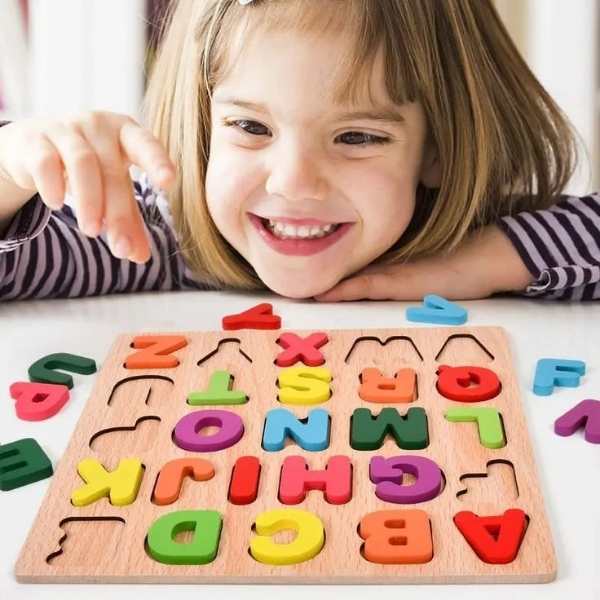
There is something about puzzles that naturally pulls preschoolers in. They would want to figure out where each piece belongs, and that curiosity makes an alphabet puzzle a wonderful way to practice letters without making your child feel like they are sitting down for a lesson.
Supplies Needed:
- Wooden or cardboard alphabet puzzle
- A flat surface
How to Set It Up:
Place the alphabet puzzle on a table or on the floor where your child can comfortably reach all the pieces. If your child is still learning the alphabet, you don’t have to start with the entire puzzle.
Choose letters your child already recognizes along with one or two new ones. This gives them a little challenge without making the activity frustrating.
How to Do the Activity:
Invite your child to fix the letters in the right places. As the are playing, ask them questions to enable them recognize the letter. If they know it, let them tell you. If they aren’t sure, simply name it together.
Encourage your child to look at the puzzle and find where the piece belongs. Let them turn and move the piece until it fits. Resist the temptation to immediately show them the answer. Giving them time to figure it out is part of the learning.
As they place each letter, repeat its name and sound. You can also connect it to something familiar such as B is for ball. Can you find the B?
What I love about alphabet puzzles is that your child is learning more than letter names. They are also practicing problem-solving, hand-eye coordination, fine motor skills, and visual recognition. For more activity that strengthen hand-eye coordination and fine motor skills, check fish bone straw-threading activity for toddlers.
5. Playdough Letter Formation
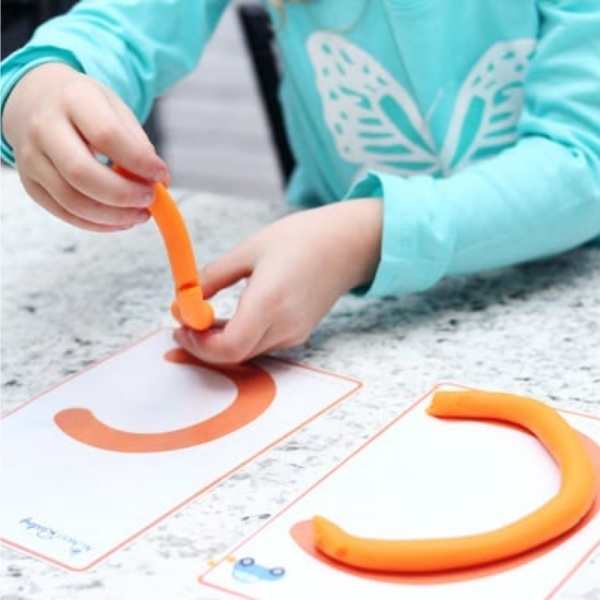
If your preschooler loves squishing, rolling, and shaping playdough, you already have a wonderful alphabet activity sitting right in front of you. Playdough letter formation lets children learn letters with their hands. This can make letter shapes easier to remember. It also gives those little fingers a chance to build the strength they need for future writing.
Supplies Needed:
- Playdough in different colors
- Alphabet printed sheet
- Clean table
- Alphabet letter cards
How to Set It Up:
Choose one or two letters to practice at a time. Place the letter card where your child can easily see it and give them a small ball of playdough.
For children who are just starting to recognize letters, begin with familiar ones, such as the first letter of their name.
You can also draw a large letter on a piece of paper and place it underneath the playdough as a guide.
How to Do the Activity:
Start by showing your child the letter and saying its name together. Then show them how to roll the playdough into long, thin pieces.
For example, if you are making A, help your child create two long pieces for the sides and a shorter piece for the middle. Let them place the pieces together to form the letter.
Once the letter is finished, have your child trace it with their finger while saying the letter name.
When your child is ready, challenge them to make a letter without the card. You can also ask them to make the first letter of a familiar word, such as B for ball or M for mom.
6. Magnetic Letter Play
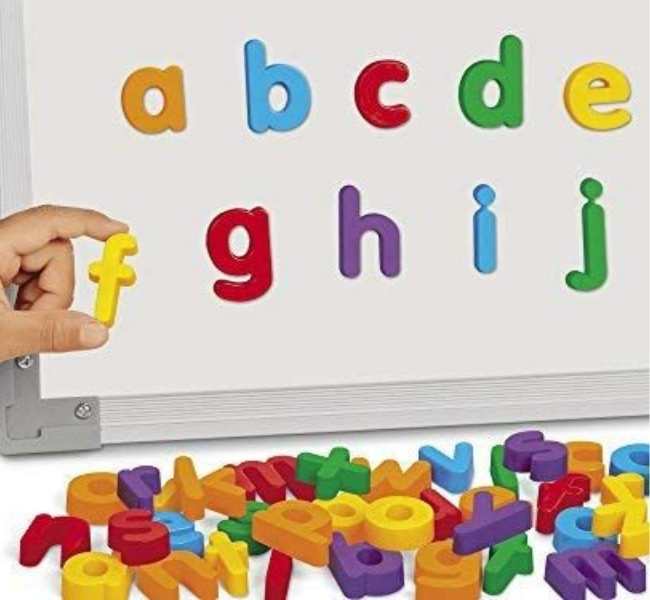
Magnetic letters are one of those simple little learning tools that can keep a preschooler busy. It gives you plenty of opportunities to talk about letters and sounds. If you already have a set on your fridge, you can turn those colorful pieces into a playful alphabet lesson without making it feel like one.
Supplies Needed:
- Magnetic uppercase and lowercase letters
- A magnetic surface (such as a refrigerator or magnetic board)
- Small container for holding the letters
How to Set It Up:
Place the magnetic letters in a small container and leave enough space on the refrigerator or magnetic board for your child to arrange them.
If your preschooler is still learning letter recognition, start with about 5–8 letters instead of putting the entire alphabet out. Choose a mixture of letters they already know and one or two new ones.
For children who are more confident with their letters, you can bring out more letters and begin making simple words.
How to Do the Activity:
Start with something your child already knows. Ask them to pick a letter from the container and tell you its name.
You might say, “You picked M! Can you tell me what letter that is?” If they don’t remember, simply say it together. There’s no need to turn the moment into a test.
Next, ask your child to find the letter on the fridge. Once your child becomes comfortable with individual letters, use the magnets to build simple words such as cat, dog, sun, or mom. You can also practice uppercase and lowercase recognition by placing a big A on the fridge and asking your child to find its little a.
As your child grows more confident, you can turn magnetic letter play into a quick daily routine. While you’re preparing breakfast or cleaning the kitchen, ask them to find a particular letter or build a short word. Those little moments can add up.
The beautiful thing about magnetic letters is that learning can happen naturally throughout the day. Your child is touching, moving, seeing, naming, and eventually sounding out letters. For more hands-on activities, see popsicle stick match activities for toddlers.
7. Letter Sticker Activity
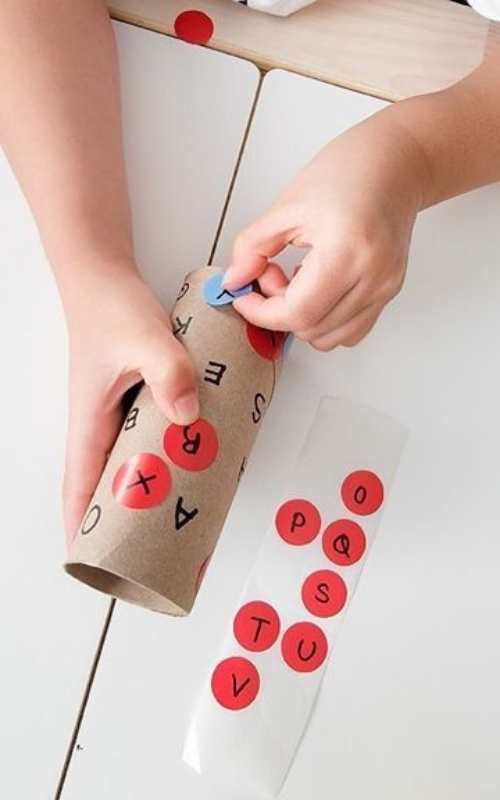
If your preschooler gets excited whenever you bring out the stickers, you can easily turn that excitement into an alphabet lesson. Letter sticker activities are simple, colorful, and especially helpful for little hands.
Supplies Needed:
- Alphabet stickers
- Toilet paper roll
- Colored pencils or dot markers
How to Set It Up:
Write several large uppercase letters on a toilet paper roll, leaving enough space around each one for your child to place stickers.
If you don’t have alphabet stickers, don’t worry. You can write letters on small round stickers yourself using a marker. It works just as well and gives you the freedom to choose exactly which letters you want to practice.
How to Do the Activity:
Give your child the sticker sheet and let them peel the stickers and place them on the matching letters on the toilet paper roll. As they work, talk about the letter and its sound.
For children who are ready for more of a challenge, mix uppercase and lowercase stickers. Ask them to place the lowercase b beside the uppercase B. You can also write simple words on the page and have your child find and place the correct letter stickers to complete them.
Another fun idea is to create an alphabet sticker book. Give your child one page for each letter and let them decorate it with the matching sticker, drawings, and pictures. This will be helpful as a little homemade alphabet book that your child can look through again and again.
8. Alphabet Animal Game
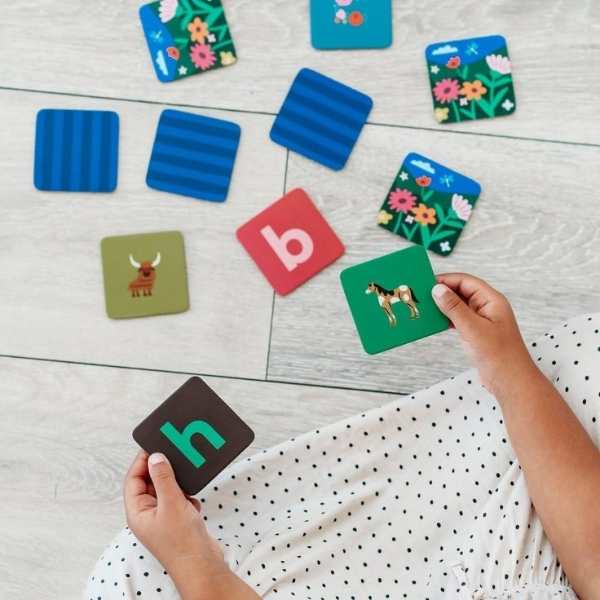
If your preschooler loves animals, this is a lovely way to bring that interest into alphabet learning. Children often remember letters more easily when they can connect them to something they already know and enjoy.
Supplies Needed:
- Animal pictures
- Alphabet cards
- Small container
How to Set It Up:
Place the alphabet cards them on the floor or table, wherever your child can sit comfortably. Next, gather some animal pictures that begin with those letters. For example, you could use A for alligator, B for bear, C for cat, D for dog, and E for elephant.
You don’t need to have animal toys at home for this activity. You can quickly draw simple animals, print pictures, or even use animal picture cards.
How to Play this activity:
Place the animal pictures in a small container. Let your child choose one without looking. If they pick up a dog, ask, “What animal did you get? Ask them to find the matching letter D.
Once they find it, place the dog beside the letter and say the connection together: “D is for dog! D.”
Continue with the other animals, keeping the conversation natural and playful. You can make animal sounds, pretend to move like the animals, or let your child act out the animal after finding its letter.
For a younger preschooler who is still learning letter recognition, focus mainly on matching the animal to the beginning letter. For a child who is more confident, mix up the letters and ask them to find the correct one independently.
9. Alphabet Bingo
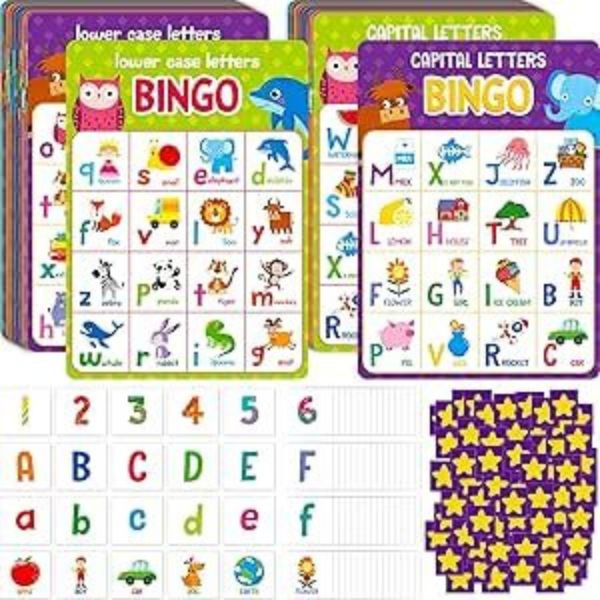
Bingo is one of those games that children can get excited about very quickly, so why not use that excitement to practice letters? Alphabet Bingo turns letter recognition into a simple family game. You can play it with your preschooler one-on-one or invite siblings to join in.
Supplies Needed:
- Paper or cardstock
- Marker or pen
- Small objects for covering letters (buttons, bottle caps, or pom-poms)
- A small bowl or container
How to Set It Up:
Create a simple Bingo card with 9 or 16 spaces, depending on your child’s age and experience. Write one uppercase letter in each space, mixing the letters around so they aren’t all in alphabetical order.
Next, write the same letters on small pieces of paper and place them in a bowl. These will be the letters you call out during the game.
Give your child a handful of buttons, bottle caps, or pom-poms to use as markers.
How to Play:
Pick one letter from the bowl and say it clearly. Give your child a moment to look at their card and find M. If they have it, let them cover it with one of their markers.
Keep drawing letters until your child gets a row, column, or another simple pattern you’ve chosen beforehand. When they complete it, celebrate with a cheerful “Bingo!”
Once your preschooler becomes comfortable with uppercase letters, create another Bingo card using lowercase letters. You can even mix uppercase and lowercase together and ask your child to find the matching form.
One little tip from experience: keep the game short. Preschoolers can lose interest quickly, especially when they’re expected to sit still for too long. A quick round that ends while they are still having fun is much better than pushing them to finish.
10. Alphabet Art Wall
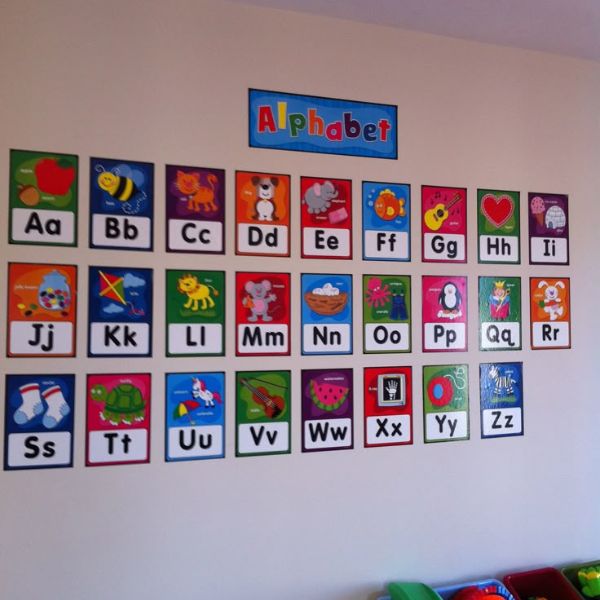
An alphabet art wall is a simple way to keep letters visible around your home while giving your preschooler something they can proudly create and look at every day.
Supplies Needed:
- Colored paper
- Markers, or colored pencils
- Glue
- Child-safe scissors
- Stickers
- Adhesive for hanging the artwork
How to Set It Up:
Choose a small wall where your child can easily see their artwork. Write a large uppercase letter on a sheet of paper and leave plenty of space around it for your child to decorate.
You can choose a new letter each week or simply introduce a new one when your child is ready. For younger preschoolers, begin with letters they recognize, including the first letter of their name.
How to Do the Activity:
Introduce the letter and let your child decide how they want to decorate it.
If you’re working on B, for example, you could say, “Today we’re making B. What can we think of that starts with B?” Listen to the child and correct any error made.
Choose one of those ideas and let your child draw it, cut out a picture, or decorate the letter with craft materials.
Once the artwork is finished, hang it on your alphabet wall. Point to the letter again and let your child tell you what it is and what word they chose.
Over time, keep adding new letters until your wall becomes a colorful alphabet display. Every few days, take a few minutes to look back at the letters you’ve already learned. Ask your child to find a particular letter or tell you the word they remember from their artwork.
Tips for Making Alphabet Learning More Fun
- Preschoolers have limited attention spans, so even 10–15 minutes of focused alphabet play can be enough.
- If your little one loves animals, cars, dinosaurs, or cooking, bring those interests into your alphabet activities.
- Use everyday moments to practice letters. Point out letters on food packages, signs, storybooks, clothing, or labels while going about your normal day.
- Choose learning activities that encourages your child to move around.
- Trying to teach all 26 letters at once can be overwhelming. Start with a small group and gradually add new ones.
- Connect letters to familiar words. When teaching B, for example, talk about words your child knows, such as ball, baby, or banana.
- Explore learning activities that allows your child to touch and manipulate letters.
- Don’t compare your child with other children. Preschoolers develop literacy skills at different rates, and one child knowing the alphabet earlier doesn’t mean another child is falling behind.
- Don’t rush letter sounds before your child is ready. Give them time to become familiar with letter shapes and names before expecting them to remember every sound.
Frequently Asked Questions
What is the best age to start teaching the alphabet?
There is no one perfect age because children develop at different rates. Many children become interested in letters around ages 2–3, while preschool years are a great time to introduce letters through playful activities. You don’t need to sit your child down for formal lessons. Singing the alphabet song, reading together, pointing out letters, and playing simple letter games can all be wonderful ways to get started.
How many letters should a preschooler learn at a time?
It is usually better to introduce a few letters at a time rather than trying to teach all 26 at once. Start with about 5–8 letters and give your child lots of opportunities to see, hear, and play with them. Once those letters become familiar, introduce a few more. You can also begin with letters that are meaningful to your child, such as the first letter of their name.
Should I teach uppercase or lowercase letters first?
There is no need to worry too much about choosing one over the other. Uppercase letters are often easier for young children to recognize because their shapes tend to be more distinct, so many parents start there. Once your child becomes comfortable, gradually introduce lowercase letters and help them understand that A and a are the same letter even though they look different.
How can I teach letter sounds along with the alphabet?
Start by connecting a letter to simple, familiar words. For example, when your child learns B, talk about words like ball, baby, or banana. Say the beginning sound clearly and let your child repeat it. You don’t have to introduce every letter sound at once. Focus on making the connection naturally during play, reading, and everyday conversations.
What if my preschooler keeps forgetting the letters?
Don’t worry. Forgetting a letter after learning it doesn’t mean your child isn’t learning. Preschoolers need lots of repetition before new information becomes familiar. Keep bringing the letter back through different activities, such as puzzles, crafts, magnetic letters, songs, and scavenger hunts. Try to avoid showing frustration because children can quickly begin to associate learning with pressure.
How long should alphabet activities last?
Keep them short and flexible. For many preschoolers, 10–15 minutes of focused activity is plenty, especially when they are still developing their attention span. If your child is happily engaged and wants to continue, you can keep going. If they start wandering away or losing interest, that’s usually a good sign to stop and try again another time.
Can I teach the alphabet without worksheets?
Preschoolers can learn a lot through play and everyday experiences. Activities like alphabet hopscotch, playdough letters, magnetic letter games, puzzles, sticker activities allow children to learn while moving and exploring. Reading books together and pointing out letters in your everyday environment can also provide valuable practice.
What should I do if my child mixes up letters like b and d?
Letter reversals and confusion between similar-looking letters are common during the early stages of learning. Instead of repeatedly correcting your child, encourage them to see and practice the letters in different ways. You can trace them with your finger, build them with playdough, compare their shapes, and use familiar words to help distinguish them. With time and repeated exposure, these differences usually become clearer.
How can I make alphabet learning interesting for a child who doesn’t like letters?
Start with what your child already loves. If they enjoy animals, play an alphabet animal game. If they love being outdoors, try sidewalk chalk letters or alphabet hopscotch. For a child who enjoys crafts, make alphabet art together. You don’t have to convince your child that letters are exciting on their own. Connecting them to something they already enjoy can make a big difference.
Does learning the alphabet early help a child learn to read?
Learning letter names and recognizing letters gives children an important foundation for early literacy. As they begin connecting letters with their sounds and hearing those sounds in words, they can gradually start developing skills needed for reading. However, knowing the alphabet alone doesn’t mean a child will automatically become an early reader. Reading together, building vocabulary, practicing sounds, and developing an understanding of how words work are all important parts of the journey.
Conclusion
Teaching the alphabet doesn’t have to feel like another lesson on your to-do list. With these fun ways to teach the alphabet to preschoolers, you can turn everyday play into meaningful learning moments. Keep it simple, follow your child’s pace, and celebrate the little wins. Those small moments of learning today can help build the confidence and early literacy skills they need for tomorrow.