
Looking for easy ways to keep your little one engaged? Try these 15 Simple Activities to Do With Your Baby at Home for fun and meaningful play
Staying home with your baby all day can sometimes feel overwhelming. You may find yourself doing the same things every day, which can make your days feel repetitive and, honestly, a little boring.
You do not need elaborate plans or expensive toys to make your time together more fun and enjoyable. Starting simple activities with your baby at home can give your little one opportunities to explore, move, discover, and learn through play.
Yes, babies can actually learn through everyday activities. Something as simple as singing a song, looking at a picture book, playing peekaboo, or exploring different textures can support your baby’s development. The best part is that many of these activities happen naturally, so you don’t need to spend hours preparing or setting up.
If you are a busy mom who loves simple, meaningful activities, you may also enjoy my guide on 10 low-prep homeschool activities for busy moms. These ideas can help you create learning moments without adding more work to your already busy day.
Spending time doing simple activities with your baby is also a beautiful way to strengthen your bond. It can support sensory development, movement, early communication, curiosity, and important learning skills.
So, if you are looking for easy ways to make your days at home more fun, you are in the right place. Here are 15 simple activities to do with your baby at home that are easy, fun, and engaging for both you and your little one.
15 Simple Activities To Do With Your Baby At Home
1. Tummy Time With a Twist
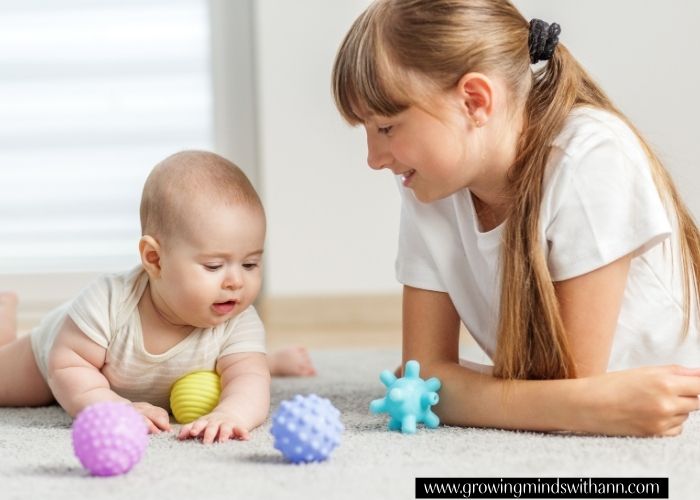
Tummy time is one of those simple baby activities that can easily become part of your everyday routine. But let’s be honest, some babies are not big fans of lying on their tummy for very long.
Instead of making tummy time feel like a task, try adding a little fun to it. Lie down in front of your baby and make funny faces, smile, sing, or talk to them. You can also place a colorful toy or baby-safe mirror in front of them to encourage them to look up and reach forward.
Another fun idea is to change the setting. Try tummy time on a soft play mat, a clean blanket, or even across your lap while you sit comfortably. Your baby gets to enjoy a different view while you stay close and connected.
Keep the sessions short and follow your baby’s cues. If your little one becomes tired or fussy, give them a break and try again later.
2. Singing Songs and Nursery Rhymes
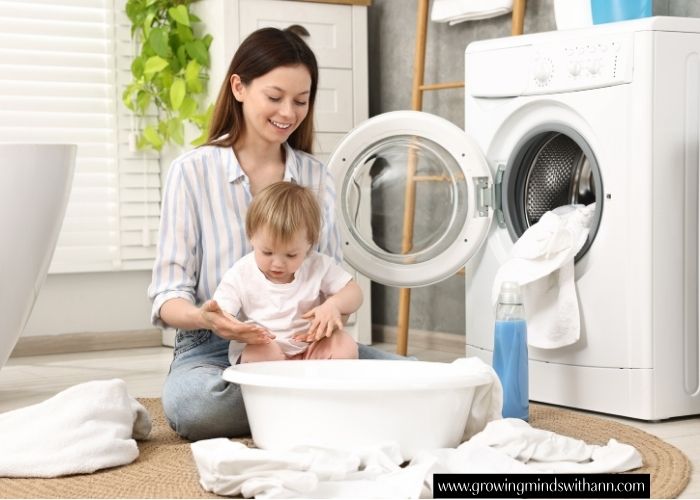
You don’t need to have a beautiful singing voice to enjoy this activity with your baby. Your baby isn’t looking for a perfect performance. They simply love hearing your familiar voice.
Pick a few nursery rhymes or songs you enjoy and sing them while holding, cuddling, or playing with your baby. You can add simple hand movements, clapping, or gentle bouncing to make the songs more interactive.
Don’t be afraid to make up your own silly songs, either. You can even sing about what you’re doing, such as changing diapers, preparing lunch, or getting dressed. These little moments can quickly become some of your favorite memories together.
Singing also gives your baby opportunities to listen to different sounds, rhythms, and words. Repeating the same songs can help them become familiar with sounds and language.
So, the next time you’re doing chores and your baby is nearby, turn your everyday routine into a little concert. Your baby may not sing along just yet, but those smiles, giggles, and curious little looks make it all worthwhile.
3. Reading a Picture Storybook Together
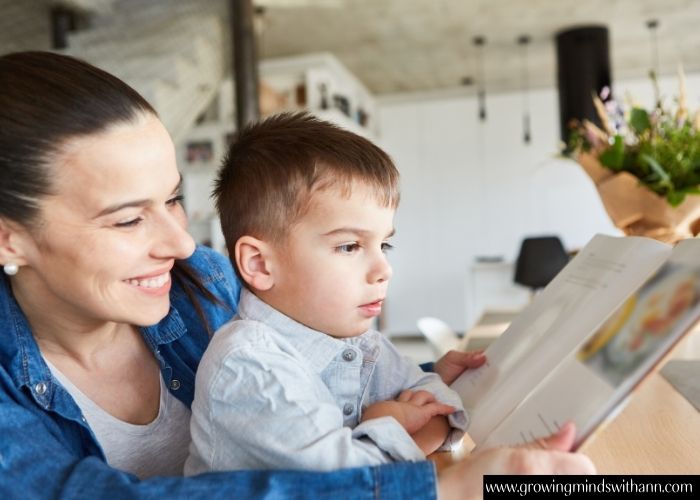
You don’t have to wait until your baby understands words before introducing them to books. Even when your little one is too young to follow the story, reading together can be a beautiful way to connect and spend quiet time.
Choose a colorful picture book with simple illustrations and let your baby look at the pages. Point to different pictures and name what you see. You can make animal sounds, use funny voices, or change your tone as you read. Your baby may not understand the story yet, but they are listening to your voice and taking in all those new sounds.
Reading together also introduces your baby to sounds, words, pictures, and the rhythm of language. More importantly, it creates a special bonding moment that your baby can begin to associate with comfort and love. These early experiences also help lay the foundation for the reading habits children develop as they grow.
As your child becomes a preschooler, you can build on this foundation by encouraging them to talk about pictures, predict what might happen next, and retell familiar stories in their own words. For more ideas on making story time engaging and supporting early literacy, explore these preschool reading tips.
You can check out these articles:
Fun ways to teach the alphabet to preschoolers.
10 proven homeschooling tips for preschoolers.
Positive discipline techniques for preschoolers.
4. Baby Mirror Play in a Safe Playpen
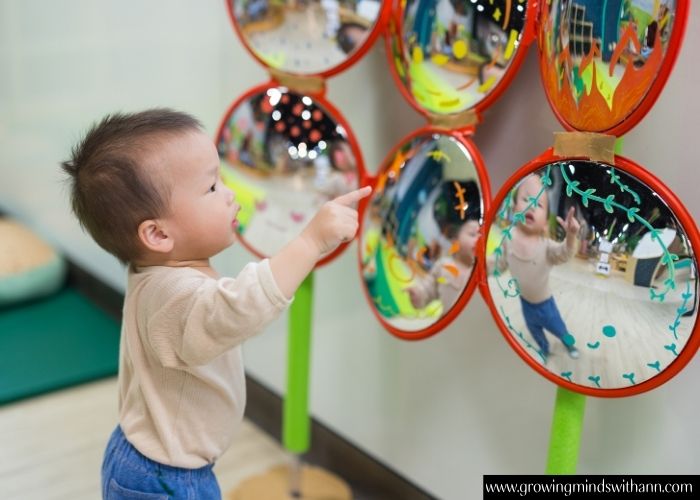
Babies are naturally curious, and a mirror can turn ordinary playtime into an exciting learning experience. If you are looking for the best baby playpen ideas for babies and toddlers, adding a baby-safe mirror to a secure playpen can create a simple, engaging activity area where your little one can explore safely.
Place a shatterproof, securely attached mirror at your baby’s eye level inside the playpen. Make sure it is designed for babies, has no sharp edges or loose parts, and is firmly fastened so it cannot fall or become a hazard. Always supervise your child during mirror play, especially as they begin crawling, pulling up, or standing.
Sit beside the playpen and point to your baby’s reflection. Smile, make funny faces, stick out your tongue, or gently wave your hands while watching how your baby responds.
You may notice your baby staring closely, smiling, kicking their legs, or reaching toward the mirror. These reactions are part of the fun and help your baby notice faces, movements, and changes in their surroundings. For toddlers, the mirror can also encourage standing, cruising, and simple pretend-play activities within the playpen.
You can move slightly from side to side and encourage your baby to follow you with their eyes. Place a few age-appropriate toys nearby to create a stimulating but uncluttered playpen setup. Avoid overcrowding the space, and remove any items that could be used for climbing or create a safety risk.
5. Explore Different Textures
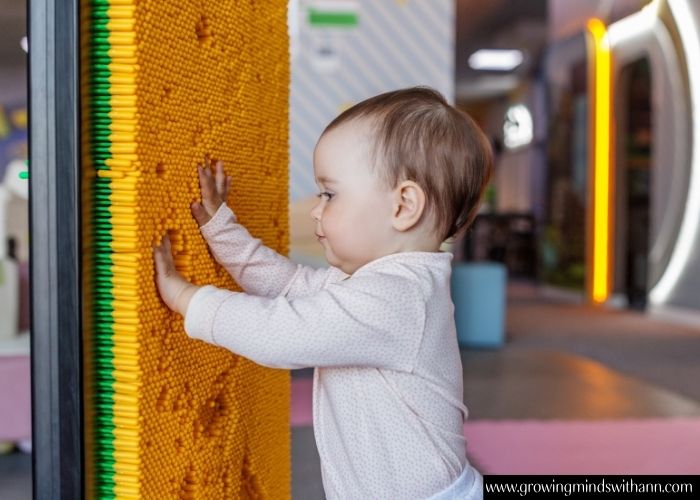
Babies love discovering the world through their senses, and touching different textures can be a simple way to encourage that curiosity. You don’t need fancy sensory toys to get started. Look around your home for clean, baby-safe items with different feels.
You can offer a soft blanket, a smooth cotton cloth, a fluffy towel, or a piece of fabric with a different texture. Let your baby touch each item while you describe how it feels. You might say, “This is soft,” or “This towel feels fluffy.”
Watch your baby’s little hands as they grab, squeeze, rub, and explore. Some textures may make them smile, while others may get a curious little stare. These simple reactions are part of how babies learn about their surroundings.
You can also turn this into a little talking game. Name the objects, describe their colors, and talk to your baby while they explore. Your voice adds a language-learning opportunity to this simple sensory activity.
As your little one grows, you can introduce more hands-on play with age-appropriate building toys. If you’re already thinking about what comes next, check out these LEGO set ideas for kids of all ages for inspirations on the right LEGO toy for your child.
You may also like, LEGO storage and organization ideas for kids’ spaces.
6. Make a Simple Sensory Bag
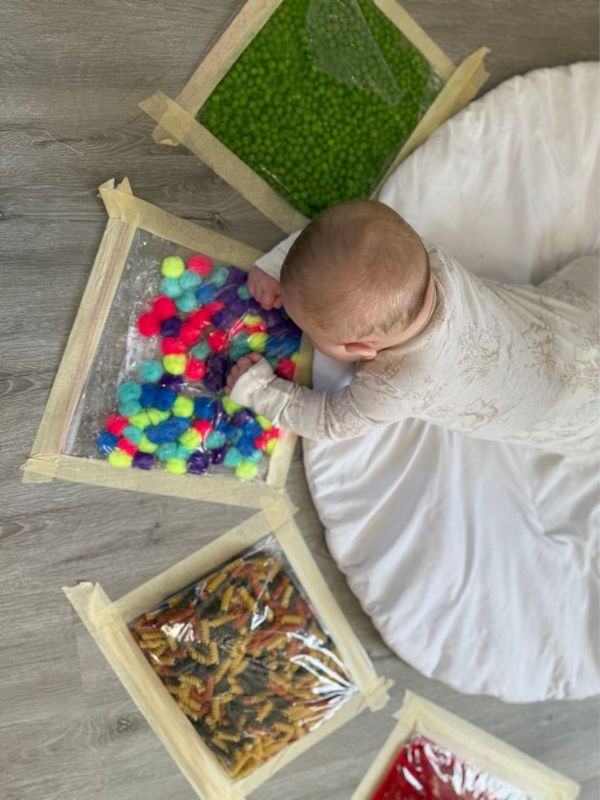
A sensory bag is another easy activity you can make at home when you want to give your baby something interesting to look at and explore. It is especially handy on those days when you need a simple activity without creating a big mess.
You can make one using a strong, resealable plastic bag filled with a small amount of hair gel or water. Add a few large, baby-safe items such as colorful foam shapes or pieces of fabric, then seal the bag securely.
Before giving it to your baby, check the bag carefully for leaks and make sure everything is tightly sealed. You can also reinforce the opening with strong tape for extra security. Always stay with your baby while they explore the sensory bag, and never allow them to chew or bite it.
As your child grows into the toddler and preschool years, you can introduce more hands-on sensory play. For more ideas, check out 13 easy sensory activities for toddlers and preschoolers for simple activities to try together.
7. Dance With Your Baby
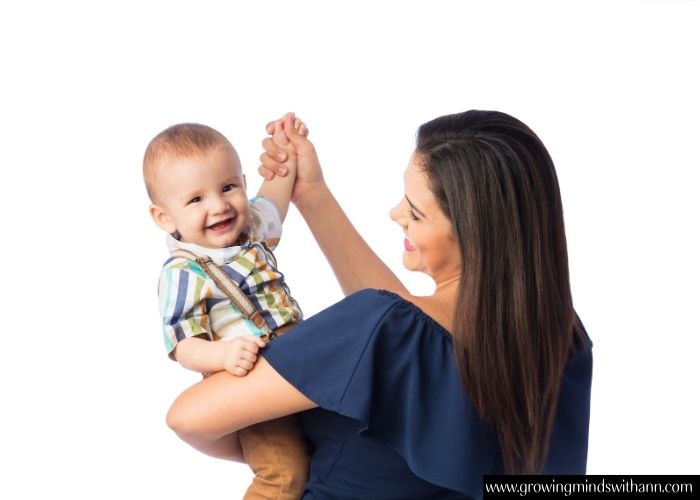
Sometimes, you don’t need to plan an activity at all. Put on a song you enjoy, pick up your baby, and have a little dance together. It can be a fun way to break up a long day at home.
Hold your baby securely and gently sway, rock, or move from side to side. You can smile, sing along, clap your hands, or make silly movements that catch your baby’s attention. If your baby is old enough to sit or stand with support, you can also dance together on the floor.
Your baby may respond with smiles, little kicks, excited sounds, or their own adorable movements. These simple reactions can make an ordinary afternoon feel much more special.
Dancing also gives your baby an opportunity to experience different rhythms and movements. As you talk or sing while dancing, you’re adding another little opportunity for communication and connection.
Remember to keep your movements gentle and avoid sudden bouncing, spinning, or jerky motions. Always support your baby’s head and body according to their developmental stage.
8. Play Peekaboo

Peekaboo is one of those simple games that can make your baby smile almost instantly. It requires no special toys or preparation, which makes it perfect for those moments when you need an easy activity at home.
Start by hiding your face behind your hands and then pop them away with a cheerful “Peekaboo!” Your baby’s reaction might be a big smile, a little giggle, or a surprised look. And honestly, those tiny reactions can make you want to play it again and again.
You can make the game more interesting by hiding behind a small blanket or popping out from behind a safe piece of furniture. You can also let your baby watch as you briefly hide a favorite toy and then bring it back into view.
Peekaboo also gives your baby opportunities to notice that people and objects can still exist even when they are temporarily out of sight. More importantly, it creates a fun little back-and-forth interaction between you and your baby.
If your little one is becoming more active and you are looking for simple activities that involve movement and exploration, you may also enjoy this masking tape activity for toddlers.
9. Talk About Everything You Do
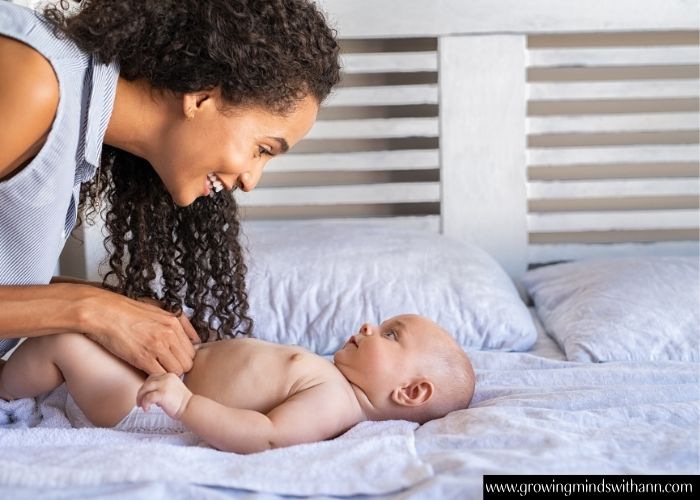
You may feel like you are talking to yourself when you spend most of the day with your baby, but those little conversations matter. Your baby may not be able to answer you yet, but they are listening to your voice and becoming familiar with the sounds of language.
You can talk to your baby about almost anything you do throughout the day. Tell them what you’re preparing for lunch, describe the clothes you’re folding, or explain what you’re doing while changing their diaper.
For example, you might say, “Mommy is washing the blue cup,” or “Let’s put on your little socks.” Keep your words simple and speak naturally. You don’t need to turn every moment into a lesson.
You can also respond to your baby’s coos, babbles, smiles, and little sounds. Pause after you speak and give them a chance to respond. Even though it may feel like a tiny conversation, these back-and-forth moments can make your baby feel heard and connected to you.
10. Have a Baby Massage Session
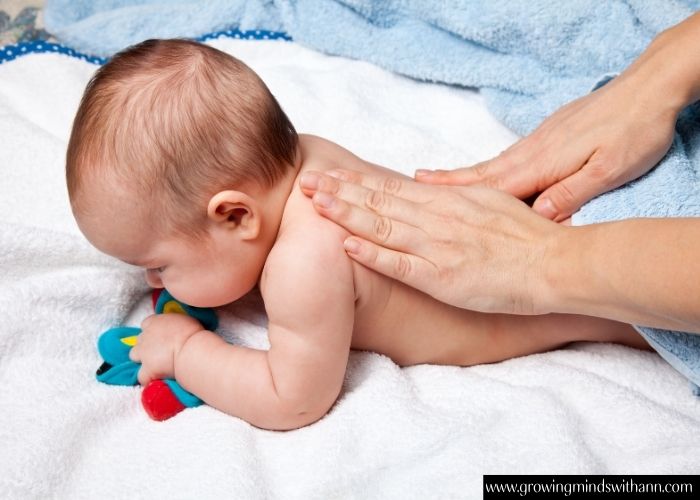
Sometimes, your baby doesn’t need another exciting activity. They may simply enjoy some quiet one-on-one time with you. A gentle baby massage can be a lovely way to slow down, connect, and enjoy a peaceful moment together.
Choose a comfortable, warm space where your baby can lie safely. You can gently massage their arms, legs, hands, and feet using slow, soft strokes. Talk or sing quietly while you massage them, so the experience feels even more comforting and familiar.
Pay attention to your baby’s reactions as you go. If they smile, relax, or seem comfortable, you can continue for a little while. If they become fussy, turn away, or seem uncomfortable, stop and try again another time.
You don’t need to make the massage long. Even a few gentle minutes can become a calming part of your day.
If you’re using baby oil or lotion, choose a product suitable for your baby’s skin and check for any reaction first. Avoid putting oil or lotion near your baby’s eyes, mouth, or broken skin.
11. Follow the Toy
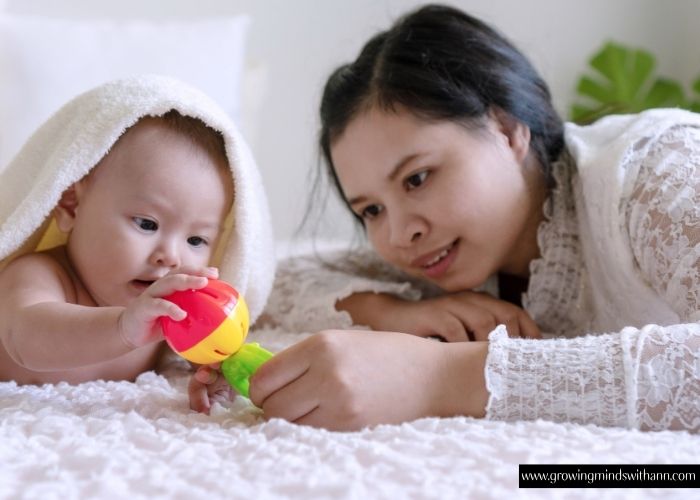
Your baby’s eyes are constantly taking in new things, so you can turn that natural curiosity into a simple little game. All you need is a colorful, baby-safe toy that your little one finds interesting.
Place your baby comfortably on their back while they are awake, then hold the toy where they can see it. Slowly move it from one side to the other and give your baby time to follow it with their eyes.
You can move the toy up and down gently or bring it a little closer before moving it away again. Don’t worry if your baby doesn’t follow the toy perfectly. Young babies are still developing their ability to focus and track moving objects. Keep the movements slow and give them plenty of time to look and respond.
As your baby grows, you can encourage them to reach for the toy or move toward it during supervised floor play. Just make sure the toy is appropriate for their age and doesn’t contain small parts that could become a choking hazard.
When your little one becomes a toddler, you can introduce more toys that encourage exploration, problem-solving, and hands-on learning. If you’re looking for ideas, check out my guide on the best educational toys for toddlers and preschoolers.
12. Kick and Move Play
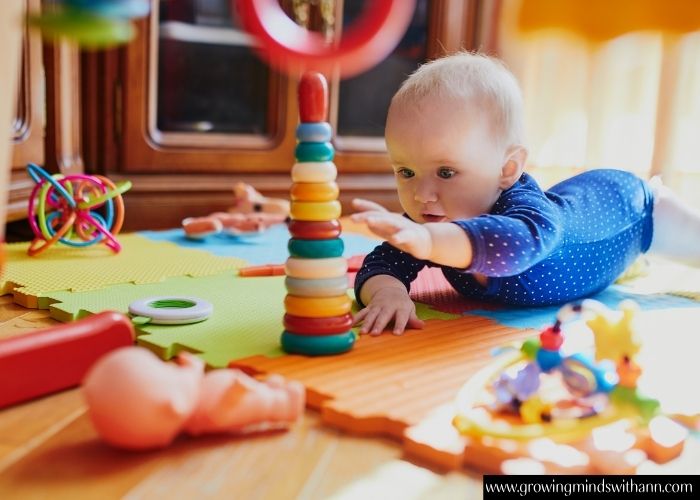
Babies have so much energy in those tiny legs, and they just want the freedom to kick, stretch, and wiggle. You can turn those natural movements into a simple play activity without needing anything fancy.
Place your baby on their back on a firm, safe surface while they are awake. Give them plenty of room to move their arms and legs freely. You can sit nearby, smile at them, and gently encourage their movements with your voice.
You can also place an interesting object near their feet and watch as they discover their little kicks. As your baby kicks, wiggles, and stretches, cheer them on. Clap and smile to encourage them. Your encouragement can turn a few minutes of movement into a fun bonding moment.
As your baby grows stronger and more mobile, they may begin reaching, rolling, and moving toward things that catch their attention. Give them opportunities for safe, supervised floor play and allow them to explore at their own pace.
13. Make Homemade Baby Shakers
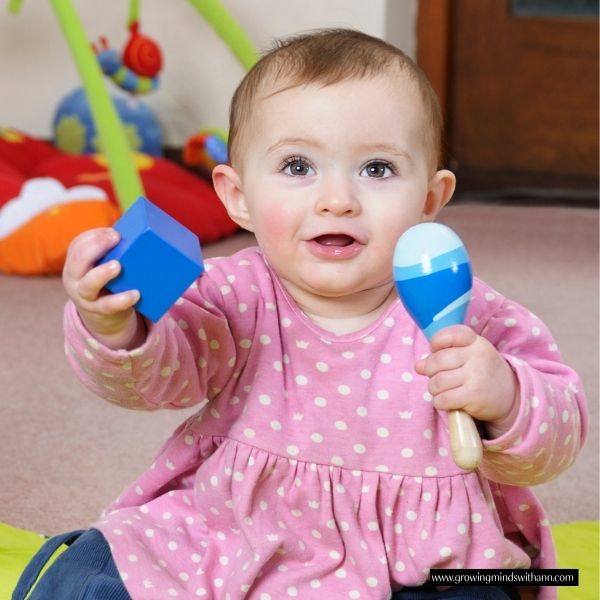
Babies are naturally curious about sounds, and a simple homemade shaker can turn an ordinary playtime into something exciting. You don’t need to spend money on a fancy musical toy. With a little creativity, you can make a simple shaker using things you already have at home.
One easy option is to use a small, sturdy container that can be completely sealed. Add a few larger items inside that create a gentle sound when the container moves. You can also use a ready-made baby-safe shaker if you prefer something designed specifically for little hands.
Once it’s ready, sit with your baby and gently shake it from side to side. Watch their little face as they listen and try to figure out where the sound is coming from. Move the shaker slowly from one side to another and encourage your baby to follow the sound with their eyes.
As your baby gets older and can safely grasp objects, you can let them hold an appropriate shaker under close supervision. Talk to them about the sound they are making and encourage them to shake it gently.
14. Go on a Mini Indoor Adventure
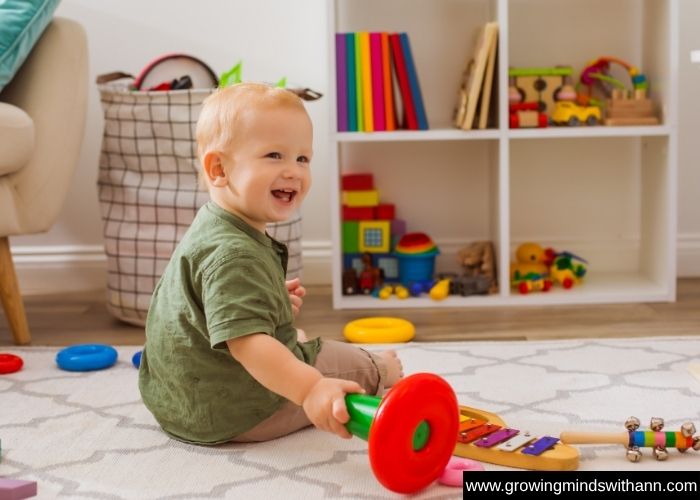
When you’ve been at home all day, even your baby may seem ready for a change of scenery. You don’t have to leave the house to create a little adventure. Simply exploring a different part of your home can be exciting for your little one.
Choose a safe area and create a small space where your baby can look around, reach, roll, or crawl, depending on their age and stage. You can place a few familiar toys around the area and add safe items with different colors, shapes, or textures for them to explore.
Move from the living room to another baby-safe area of your home and talk about what you see along the way. You can point out a window, a picture on the wall, a plant, or anything else that catches your baby’s attention.
For younger babies, simply carrying them around while talking about their surroundings can be enough. For babies who are crawling, give them a safe floor space where they can explore at their own pace while you stay nearby.
You can make the adventure feel special by singing a little song, playing peekaboo around a doorway, or bringing along a favorite toy. There is no need to create a complicated setup. Your baby will probably be more interested in discovering something ordinary than you expect.
15. Have a Special Cuddle and Chat Time

Not every activity with your baby needs to involve toys, music, or a big setup. Pick a comfortable spot, hold your baby close, and spend a few minutes cuddling. Look into their eyes, smile, talk softly, and enjoy those little sounds they make.
You can also use this quiet time to notice what your baby seems to enjoy most. Maybe they love being cuddled, hearing you sing, or having you talk to them. Paying attention to these little preferences can help you understand how your child receives and enjoys affection as they grow.
As your child gets older, understanding how they respond to affection can also help you connect with them in meaningful ways. You may enjoy reading simple ways to discover your child’s love language for better parenting for more ideas.
How to Make These Simple Activities With Your Baby More Enjoyable
- Follow your baby’s mood and energy level.
- Keep each activity short and simple.
- Let your baby take the lead during playtime.
- Choose activities that match your baby’s developmental stage.
- Repeat your baby’s favorite activities often.
- Use everyday household items whenever possible.
- Talk, sing, smile, and make eye contact during activities.
- Give your baby plenty of time to explore.
- Take breaks when your baby becomes tired or overstimulated.
- Keep your phone and other distractions away when possible.
- Focus on enjoying the moment rather than completing an activity.
- Remember that your attention is often your baby’s favorite part of playtime.
Safety Tips for Doing Simple Activities With Your Baby at Home
- Always supervise your baby during every activity.
- Choose activities that are suitable for your baby’s age and developmental stage.
- Keep small objects, loose parts, and choking hazards away from your baby.
- Use baby-safe toys and materials without sharp edges or detachable pieces.
- Avoid placing plastic bags, cords, strings, or unsafe household items near your baby.
- Make sure your baby has a safe, clean, and comfortable space to play.
- Never leave your baby unattended on a bed, sofa, changing table, or other elevated surface.
- Check homemade sensory toys regularly for leaks, tears, or loose parts.
- Stop an activity if your baby becomes tired, upset, or overstimulated.
- Follow safe sleep guidelines and never use play activities as a substitute for safe sleep.
- Keep cleaning products, medications, hot drinks, and other dangerous items out of reach.
- Wash and clean toys and activity materials regularly.
- Follow the manufacturer’s age recommendations for baby products and toys.
- Trust your baby’s cues and avoid forcing them to continue an activity.
Frequently Asked Questions
How can I entertain my baby without buying toys?
You really don’t need a house full of toys to keep your baby engaged. Your voice, face, and everyday surroundings can provide plenty of entertainment for a young baby.
Try singing, making funny faces, playing peekaboo, talking about what you see, or letting your baby safely explore different textures. A simple walk around the house can also become an exciting little adventure when you point out things and talk to your baby.
What can I do with my baby when we are bored at home?
When the day starts feeling repetitive, try changing the activity rather than feeling like you need to create something elaborate. You could put on some music and dance together, read a favorite book, try tummy time with a colorful toy, or have a little sensory play session.
Sometimes, even moving to another safe area of the house and exploring together can make things feel different. And if nothing seems to work, don’t feel guilty about simply cuddling your baby. You don’t have to fill every moment with activities.
How do simple activities help my baby’s development?
Simple activities give babies opportunities to use their senses, move their bodies, listen to language, and interact with the people around them. For example, talking and singing expose your baby to different sounds and words, while tummy time gives them opportunities to practice movement.
Sensory activities can also encourage babies to explore different textures, colors, shapes, and sounds. Most importantly, activities that involve you give your baby plenty of opportunities for connection and responsive interaction.
How long should I do an activity with my baby?
There is no perfect amount of time for every baby. Some babies may happily spend several minutes exploring an activity, while others may lose interest after a minute or two.
Pay attention to your baby’s cues instead of worrying about the clock. If your baby is smiling, looking at you, reaching, or making happy sounds, you can continue. When they become fussy, tired, or distracted, give them a break and try something else later.
What activities are good for a young baby?
Young babies can enjoy simple activities such as tummy time, singing, talking, reading picture books, gentle movement, mirror play, and following a colorful toy with their eyes.
At this stage, your baby doesn’t need complicated games. Your face, voice, and gentle interaction are often enough to keep them interested. Keep activities short, simple, and appropriate for their developmental stage.
What activities can I do with my 6-month-old baby at home?
At around six months, many babies are becoming more interested in reaching, grabbing, sitting, and exploring their surroundings. You can try peekaboo, sensory exploration, mirror play, reading, singing, and encouraging your baby to reach for age-appropriate toys.
You can also give your baby plenty of supervised floor time to move and explore. Remember that babies develop at different rates, so choose activities based on what your own baby can comfortably and safely do.
Do I need to plan activities for my baby every day?
Not at all. It is completely okay if some days are filled with planned activities while other days are simply about feeding, cuddling, resting, and getting through your normal routine.
Everyday moments can become learning opportunities too. Talking while you prepare food, singing during diaper changes, or looking out the window together can all give your baby opportunities to interact and learn.
Can simple activities help me bond with my baby?
Absolutely. Many simple activities are less about the activity itself and more about the connection you share while doing it.
When you sing, read, cuddle, talk, smile, or play peekaboo, your baby gets to hear your voice, see your face, and experience your attention. These small moments can help build a strong and loving connection between you and your little one.
Conclusion
Finding simple activities to do with your baby at home doesn’t have to feel like another task on your busy mom’s list. Sometimes, the smallest moments can bring the biggest smiles and create the sweetest memories.
Whether you are singing together, reading a book, playing peekaboo, exploring textures, or simply cuddling and talking, remember that your baby doesn’t need perfect activities. They simply need your love, attention, and presence.
So, pick a few activities that feel natural for you and your little one, and enjoy them at your own pace. These everyday moments may seem small now, but one day, you’ll look back and realize just how special they really were.