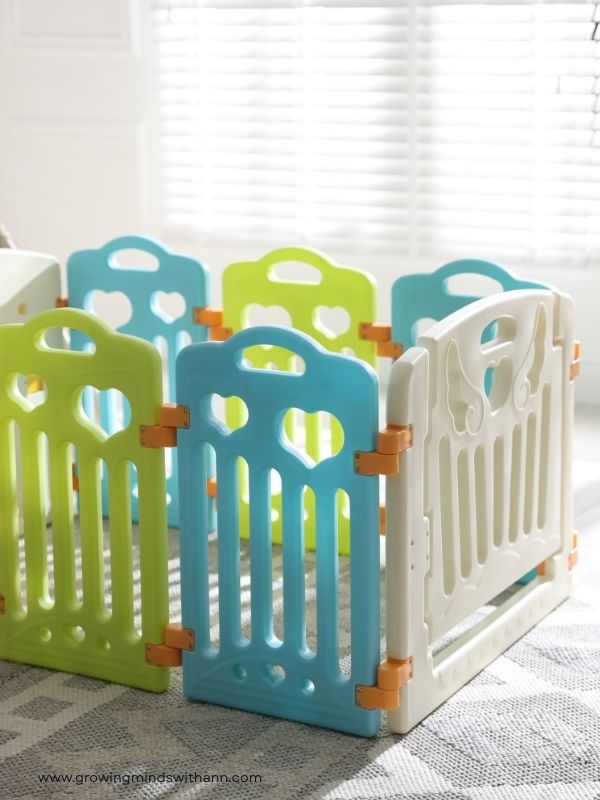
Have you been looking for ways to keep your little one happily engaged while you handle other chores? These best baby playpen ideas for babies and toddlers are just what you need.
A baby playpen provides a practical space where your little one can play safely. It also gives you a little breathing room to attend to simple tasks around the house. As your child grows, their play needs and abilities naturally change.
Because of this, their playpen setup should grow and change with them too.
My babies always enjoyed spending time in their playpen. They loved exploring, reaching for toys, and discovering new ways to play. I also loved knowing they had a dedicated space for safe, hands-on play.
With the right setup, a playpen can become more than just a safe space. It can encourage movement, exploration, creativity, and early learning through everyday play. You don’t need complicated toys or expensive setups to make it enjoyable.
And as your toddler becomes more independent, you may even start noticing new developmental milestones.
For example, many parents begin to wonder about readiness for things like potty training during this stage.
If you’re starting to see those early independence cues, you might also find it helpful to read my article on 7 clear signs your toddler is ready for potty training. It can help you understand whether your child is truly ready and how to support them gently through the process.
In this article, you will find the best baby playpen ideas for babies and toddlers. These ideas are simple, practical, and easy to set up at home.
Different Types Of Baby Playpens
1. Mesh Baby Playpens
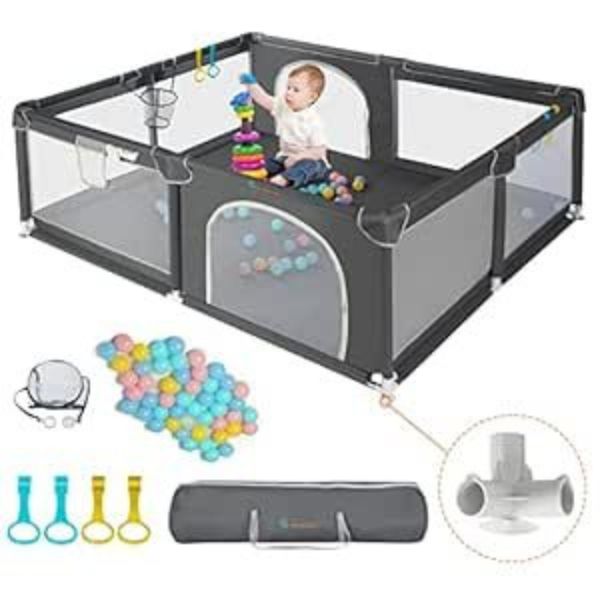
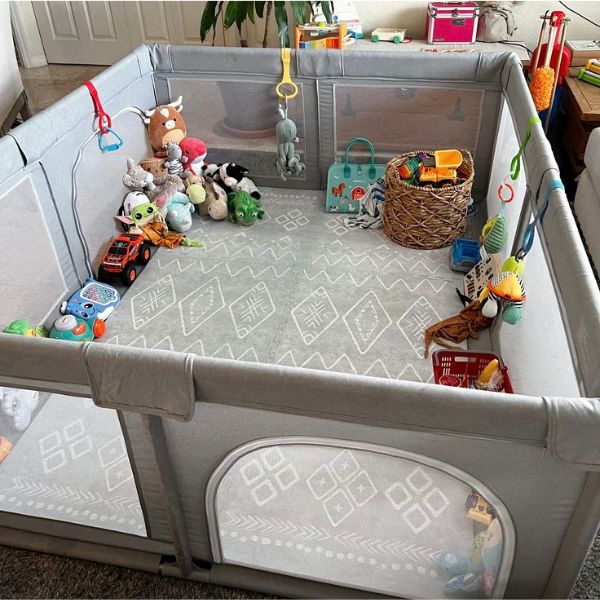
Mesh baby playpens are a popular choice for parents who want a simple and practical play space. Their soft, breathable sides make it easier to keep an eye on your little one. I particularly like the visibility they offer during everyday playtime. You can move around the room while still seeing what your baby is doing.
Mesh playpens are also lightweight and often easy to move around the house. You can place it in the living room during the day. Then, you can move it elsewhere when your family needs more space. They can work well for babies who are crawling, sitting, or beginning to explore. You can add a few age-appropriate toys without overcrowding the space.
2. Foldable Baby Playpens
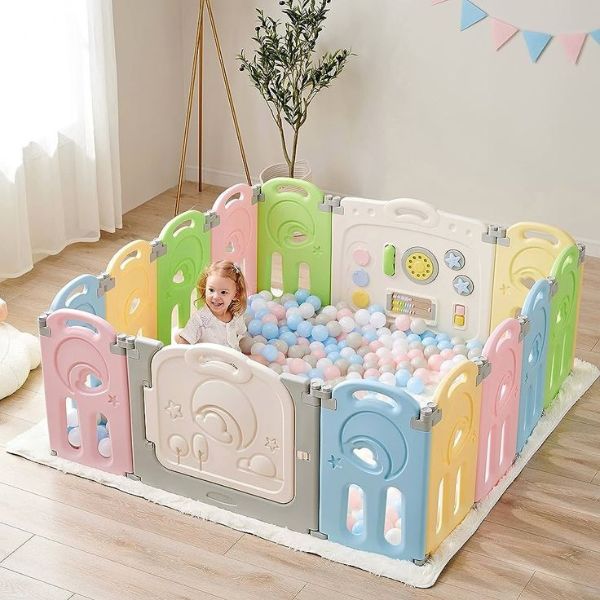
Foldable baby playpens are a wonderful option for parents who value convenience and flexibility. They can be especially helpful when you have limited space at home. One thing I love about foldable designs is how easy they can be to store. You can set one up during playtime and fold it away afterward.
This can keep your living space from feeling crowded with baby equipment. It is also handy when you need to move the playpen between different rooms.
Foldable playpens can also be useful when visiting family or traveling with your little one. Your baby can have a familiar play space even when you are away from home. Before using a foldable playpen, always check that it is properly opened and securely locked. Look for any loose, damaged, or worn parts before placing your child inside.
3. Wooden Baby Playpens
Source
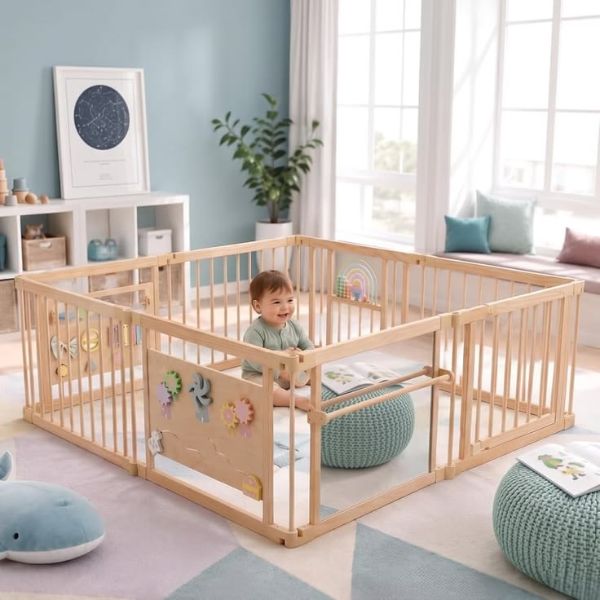
Wooden baby playpens have a simple, sturdy feel that many parents really appreciate. They can also look beautiful without making your home feel like a nursery. Unlike soft mesh designs, it usually have solid frames and open sides. This can make it easier for your little one to see what is happening around them.
A wooden playpen can give your baby plenty of room to sit, crawl, stand, and play. As your little explorer becomes more active, having enough space becomes even more important. You can add a few favorite toys, board books, or age-appropriate activities inside.
For example, simple hands-on ideas like a fish bone straw threading activity for toddlers can be a great way to keep little hands busy while supporting fine motor skills. Try to leave enough open space for your child to move around comfortably.
Wooden playpens can also work well for toddlers who enjoy being active. They provide a defined play area while allowing your child to explore independently. If you choose a wooden playpen, pay close attention to its construction and safety features. Look for smooth surfaces, sturdy joints, and secure openings.
4. Pop and Go Baby Playpen
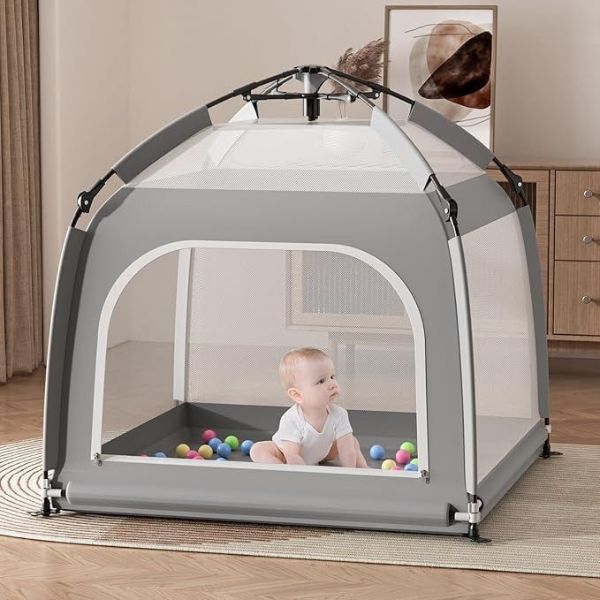
This baby playpen is a lovely option for parents who value convenience. It is designed to make setting up a safe play space much easier. The quick setup can be especially helpful when you have a busy little one. You can create a play area without spending too much time assembling different parts.
This type of playpen can also be handy when you are traveling or visiting family. Your little one can have a familiar space to play wherever you go. You can keep a few favorite toys inside to make the space feel welcoming.
Before using a pop and go playpen, make sure it opens completely and locks securely. Check the manufacturer’s instructions and follow the recommended age and weight limits.
5. Playpens With Activity Panels
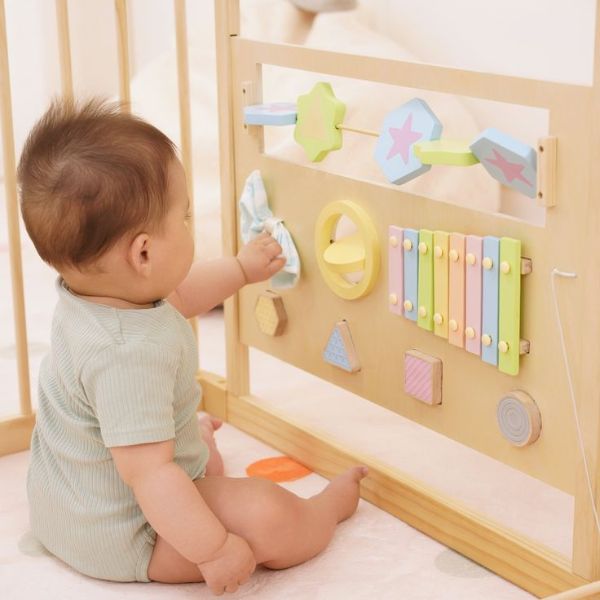
Playpens with activity panels can make playtime more exciting for curious babies and toddlers. They combine a safe play space with simple activities your little one can explore. Activity panels may include shapes, colors, textures, spinners, and other interactive features. These activities can keep little hands busy while encouraging curiosity and exploration.
For younger babies, simple activities can encourage reaching, touching, grasping, and hand-eye coordination. As toddlers grow, they may enjoy figuring out how different features work. You can also introduce simple learning activities alongside the toys on the activity panel.
For example, matching games can turn playpen time into a fun learning opportunity. If your toddler enjoys matching colors and pictures, you can try my Popsicle Stick Match Activities for Toddlers. It is a simple hands-on activity that can make learning feel more like play.
I love activities like this because they do not require complicated materials or elaborate setups. You can easily prepare them and introduce them during your toddler’s playtime.
6. Large Play Yards
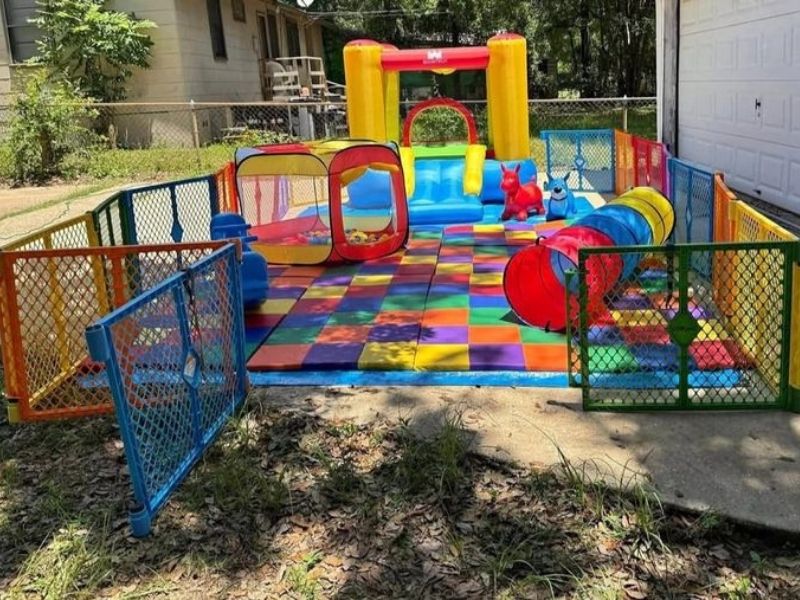
If you have an active baby or toddler, a large play yard can give them plenty of room to move. Instead of feeling restricted, your little one can crawl, walk, stretch, and explore comfortably.
Large play yards are also a great way to create a dedicated space for the best educational toys for toddlers. By keeping everything in one safe area, you can easily rotate toys that support learning, such as shape sorters, stacking blocks, puzzles, and sensory play items.
For toddlers, having extra room makes playtime more engaging and meaningful. They can move between different learning activities and explore a variety of skills at their own pace. You can even set up simple learning zones within the play yard but try not to overcrowd the space.
Large play yards are also helpful for siblings who enjoy playing together. With enough space, they can share educational toys, collaborate on fun sibling bonding activities that reduce sibling rivalry at home, and learn through play side by side.
Fun Baby Playpen Activities for Babies and Toddlers
A playpen can be so much more than just a safe space to keep your little one while you get things done. With a little creativity, it can become a cozy, engaging world where your baby or toddler explores, learns, and plays independently.
Babies and toddlers are naturally curious, and even simple everyday items can spark joy, learning, and discovery.
If you enjoy easy, hands-on ideas like these, you might also love exploring masking tape activities for toddlers, simple sensory activities for toddlers, and even fun ways to teach the alphabet to preschoolers—all of which can be adapted beautifully into playpen play.
Here are some fun, easy, and meaningful playpen activities you can try at home.
1. Ball Rolling
Soft balls are one of the simplest yet most engaging toys for babies and toddlers. Place a few lightweight, baby-safe balls inside the playpen and let your little one explore freely.
Babies will enjoy reaching out, grabbing, and mouthing the balls as they discover texture and movement. As they grow, they’ll start pushing and rolling them, which helps build hand-eye coordination and early motor skills.
For toddlers, you can turn it into a shared game by rolling the ball back and forth. This simple interaction teaches turn-taking, encourages social connection, and often leads to lots of giggles when the ball goes “off course.”
2. Stacking Cups
Stacking cups help your babies to grasp, shake, and explore different sizes and colors. As the child becomes a toddler, stacking becomes a fun challenge.
They can build tall towers, knock them down, and rebuild again. This repetition is actually how they learn problem-solving and cause-and-effect.
You can also gently introduce early learning by encouraging them to sort cups by size or color, but keep it light and playful so it never feels like pressure.
3. Color Matching
This is a simple way to introduce early cognitive skills without overwhelming your child. Use safe, colorful toys or household items and place a few inside the playpen.
Toddlers love the feeling of “finding the right one,” even if they don’t fully understand the concept yet.
Keep it fun so that it feels more like a game of discovery than a lesson.
4. Board Book Time
Books inside the playpen can create a calm, comforting activity that your child can return to again and again. Choose sturdy board books with bright pictures and simple themes.
Let your baby explore by touching, and flipping pages in their own way. It’s all part of learning. For toddlers, sit nearby and talk about what you see together using animals, objects, or familiar daily routines.
5. Sensory Basket
A sensory basket is a wonderful way to support your child’s natural curiosity. Fill a small container with safe, age-appropriate items that have different textures, soft fabric toys, crinkly materials, smooth rattles, or rubbery objects.
Let your baby or toddler explore at their own pace. They might squeeze, shake, rub, or simply observe each item.
This kind of play connects beautifully with other sensory activities for toddlers, helping them build focus, coordination, and early brain development. Just remember to always supervise closely and avoid anything small, sharp, or unsafe.
6. Toy Treasure Hunt
Toddlers love the excitement of finding things, and a simple treasure hunt can keep them engaged for a long time. Hide a few familiar toys around the playpen, making sure they are still slightly visible for easier discovery.
You can guide them with simple clues like, “Where is your teddy hiding?” or “Can you find the blue car?”
This activity builds problem-solving skills, attention, and memory while they are having fun.
7. Building Block Fun
Large building blocks are perfect for little hands and big imaginations. Toddlers can stack them into towers, line them up, or create simple structures like houses or roads.
At this age, the process matters more than the result. It teaches resilience, patience, and experimentation. You can join in by building your own structure and letting your child knock it down.
8. Sing-Along Time
Music has a magical way of calming and engaging young children. Singing familiar nursery rhymes inside the playpen can instantly lift the mood and create a joyful atmosphere.
Add simple actions like clapping, waving, or bouncing to the rhythm. Babies will enjoy watching your expressions and movements, while toddlers will start copying you.
This kind of play supports language development, rhythm awareness, and emotional connection. All these help to strengthen family bond.
9. Shape Sorting
Shape sorters are a great way to introduce early problem-solving skills. Give your toddler a simple sorter with large, easy-to-handle shapes.
At first, they may just try different openings randomly, and that’s okay. With time, they begin to notice patterns and match shapes correctly.
If they get frustrated, gently guide them without taking over. The goal is to let them experience moment on their own, which builds confidence and independence in kids.
1o. Pretend Play
Pretend play is where your toddler’s imagination truly shines. Inside the playpen, they might cook imaginary meals, care for a doll, or talk on a toy phone.
You don’t need to direct them, just provide a few simple items and let them lead the way. You’ll often hear them talking to themselves or creating little stories as they play.
Source
How to Set Up a Baby Playpen at Home
- Choose a safe and spacious area away from stairs, cords, heaters, and other hazards.
- Place the playpen on a stable, level surface.
- Follow the manufacturer’s instructions when assembling the playpen.
- Make sure every lock, latch, and connection is properly secured.
- Check the playpen regularly for loose, broken, or damaged parts.
- Choose toys that match your child’s age and developmental stage.
- Keep small objects and choking hazards away from younger babies.
- Add a few books, soft toys, and simple learning activities.
- Leave enough open space for your child to crawl, stand, and move.
- Avoid overcrowding the playpen with too many toys.
- Rotate toys occasionally to keep playtime interesting.
- Keep the playpen clean and check it regularly for dirt or spills.
- Always supervise your little one during playpen time.
Baby Playpen Ideas for Different Ages
Your little one’s playpen does not have to stay the same forever. As babies grow, their abilities, interests, and play needs change too. What keeps a six-month-old happy may not interest an active toddler. You should be adjusting the playpen to match their stage.
Here are some simple baby playpen ideas for different ages.
0–6 Months
At this stage, your baby is discovering the world through their senses. Keep the playpen simple, comfortable, and free from unnecessary items.
You can include:
- A comfortable tummy-time surface
- Soft, age-appropriate toys
- Baby-safe rattles
- High-contrast books or cards
- Soft sensory toys
- A baby-safe mirror
Spend time talking, singing, and smiling at your baby during play. Your voice and face can be more exciting than any toy.
6–12 Months
Your baby may start sitting, crawling, reaching, and exploring more actively. This is a lovely time to introduce activities that encourage movement.
You can include:
- Soft balls for reaching and rolling
- Stacking cups
- Textured toys
- Board books
- Simple cause-and-effect toys
- Baby-safe sensory activities
- Crawling and reaching games
Leave plenty of open space for your baby to move around. Their little body is learning new skills almost every day.
1–2 Years
Once your little one becomes a toddler, playtime can become much more active. They may enjoy building, sorting, pretending, and experimenting with different toys.
Try adding:
- Large building blocks
- Shape sorters
- Stacking toys
- Simple puzzles
- Color-matching activities
- Board books
- Pretend-play toys
- Easy sensory activities
You can also introduce simple learning games during playpen time. Keep them playful and allow your toddler to explore at their own pace. You can explore my best STEM toys kids actually love for hands-on learning.
2–3 Years
Toddlers between two and three often have plenty of energy and imagination. Their playpen can become a small space for creative and independent activities.
You can include:
- Large puzzles
- Building blocks
- Matching games
- Pretend-play materials
- Simple art activities
- Books
- Sorting activities
- Age-appropriate educational toys, check best educational toys for toddlers to get insights.
What to Look for in the Best Baby Playpen
Here are some of the things to keep in mind when choosing the best baby playpen:
- Choose a sturdy playpen with secure locks and stable sides.
- Check that the playpen is suitable for your child’s current stage.
- Make sure there is enough room for your child to move and play comfortably.
- Look for durable materials that are easy to clean and maintain.
- Mesh sides can make it easier to keep an eye on your little one.
- Consider a foldable design if you plan to move or travel with it.
- Make sure the play area provides a comfortable surface for play.
- Choose a design that you can assemble, fold, and store without much trouble.
- The playpen should remain firmly in place when your baby moves around.
- Babies and toddlers can be wonderfully messy, so washable materials are helpful.
- Consider whether the playpen can continue meeting your child’s needs as they become more active.
Baby Playpen Safety Ideas Every Parent Should Know
A playpen can give your little one a wonderful space to play and explore. However, safety should always come first, especially as babies become more mobile.
Keep these simple safety ideas in mind when using a baby playpen:
- Make sure the baby playpen suits your child’s age, size, and developmental stage.
- Assemble and use the playpen exactly as the manufacturer recommends.
- Make sure all latches and locking mechanisms are securely fastened before use.
- Inspect it regularly to check for loose parts, damaged mesh, broken joints, or other signs of wear.
- Place the playpen away from stairs, windows, heaters, cords, and furniture.
- Avoid toys with small parts that could become choking hazards.
- Do not add loose pillows, blankets, or other unnecessary items.
- Stop using the playpen if your toddler can climb over the sides.
- Make sure the playpen sits securely on a stable, level surface.
- Teach older siblings not to climb or lean heavily on the playpen.
- Regularly clean the playpen and remove anything that could become unsafe.
- As your child grows, reassess the playpen and adjust activities accordingly.
Frequently Asked Questions About Baby Playpens
What age can a baby start using a playpen?
There is no single age that works for every baby. It depends on the playpen’s design and the manufacturer’s recommendations. Some playpens are suitable for young babies, while others are better for sitting or crawling babies.
Always check the manufacturer’s age and weight guidelines before using one.
Are baby playpens safe for babies?
A properly designed and correctly used playpen can provide a designated space for play. However, it should not replace supervision or proper babyproofing. Choose a sturdy playpen and keep unsafe objects away from your little one. Also check it regularly for damage or loose parts.
What should I put inside a baby playpen?
Keep the setup simple and choose items that suit your child’s age. You might include soft toys, board books, stacking cups, sensory toys, or large building blocks.
Avoid overcrowding the space with too many toys. Your child needs enough room to move, crawl, and explore.
How long can a baby stay in a playpen?
There is no universal amount of time that suits every child. Try to balance playpen time with floor play, movement, interaction, and other activities. Watch your child’s mood and behavior. If they become frustrated or restless, it may be time for a change of activity.
Can a toddler use a baby playpen?
Yes, many playpens are designed for both babies and toddlers. However, you should choose one that suits your toddler’s size and abilities.
Pay particular attention to climbing. If your toddler can climb over the sides, the playpen may no longer be appropriate.
What activities can babies do in a playpen?
Babies can enjoy simple activities such as tummy time, reaching games, sensory exploration, and looking at board books. As they become more mobile, you can introduce soft balls, stacking cups, and other age-appropriate toys..
How can I make a playpen more fun?
You do not need to buy lots of new toys. Try rotating the toys you already have or introducing simple activities. You can also sing songs, read books, play matching games, or create a small sensory basket.
Can my baby sleep in a playpen?
This depends on the specific product and its intended use. Some products are designed for sleep, while others are intended only for supervised play. Always follow the manufacturer’s instructions and safety guidance. Do not assume that every playpen is suitable for sleeping.
Can siblings share a playpen?
This depends on the size of the playpen and the children’s ages. A larger play yard may provide more room for supervised shared play. Always consider each child’s size, behavior, and developmental stage. Make sure there is enough space for everyone to move comfortably without overcrowding.
Conclusion
Choosing the right playpen ideas for your baby or toddler doesn’t have to feel overwhelming. With a cozy, safe setup, a few age-appropriate toys, and some simple activities, your little one can happily explore and learn through play.
Trust your instincts, keep safety in mind, and most of all, enjoy those sweet little moments of discovery as they grow.