
Learn how to encourage kids to set goals at home with simple goal-setting activities.
Kids do not learn how to set goals by hearing you talk about goal setting. They only learn how to set goals when you teach and encourage them to do so. They always want to do one thing or the other but don’t know to go about it.
This reminds me of an experience I had with one of my kids. She came back home one Friday after school feeling disappointed. She was hoping to come back from school with the “Star of the Week” recognition. But was disappointed when her name wasn’t mentioned.
We talked about it and she told me how she really wanted to be the star of the week the following Friday. She knew what she wanted, but didn’t know how to work toward it.
I used that opportunity to help her understand that wanting something is only the first step. We talked about some of the things she could do during the week to give herself a better chance of being chosen.
She did all we discussed through out the week, and then when Friday finally came, she was recognized and given the award of the star of the week. She was very excited and I was happy she achieved her goal.
As parents, we can use simple everyday moments like this to teach our children about goal setting, patience, effort, and consistency. And the best part is that we can start right at home.
In this post, you discover how to encourage kids to set goals at home. You will also see the importance and easy techniques for kids to set realistic goals.
You may also like, 6 money habits your child is learning from you without you realizing it.
Importance Of Goal Setting For Kids
Goal setting is not only for adults, kids can also set goals and work toward them, even in their tender age. When we teach kids to set simple and realistic goals, we help them develop habits that can help them at home, school, and as they grow.
Below are some of the importance of teaching your kids goal setting:
1. Setting goals helps kids to understand responsibility. It helps them to understand that they have a role to play in achieving anything they desire.
2. Teaching goal setting to kids is a practical way to raise confident and independent kids. It gives them opportunities to make choices, set goals, believe in themselves and walk towards their goals.
3. Kids learn that some things take time and that they may need to keep working even when they do not see immediate results.
4. Having a goal can help children understand the power of consistency. They learn the importance of practicing and making an effort regularly.
5. When their goal does not go as planned, children can learn to think about what they can change or try differently.
How to Encourage Kids To Set Goals At Home
1. Start With Your Child’s Interests

The first step to teaching your kids how to set goals at home is by starting with something they genuinely care about.
When the goals aligns with their interest, it will be easier for them to work towards them. For instance, if your child loves drawing, but still want to become better at it. You can help the child to set a simple goal of practicing how to drew few times each week
If you have a child that enjoys reading, encourage the child to set a goal to finish two or three books within a month.
As parents, our role is not to control every goal our children set. We can guide them, offer suggestions, and help them make their goals realistic while still allowing them to have a voice in the process.
For more parenting articles, see:
10 Common parenting mistakes to avoid in your child’s early years.
Simple ways to discover your child’s love language for better parenting.
2. Help Them Choose Realistic Goals
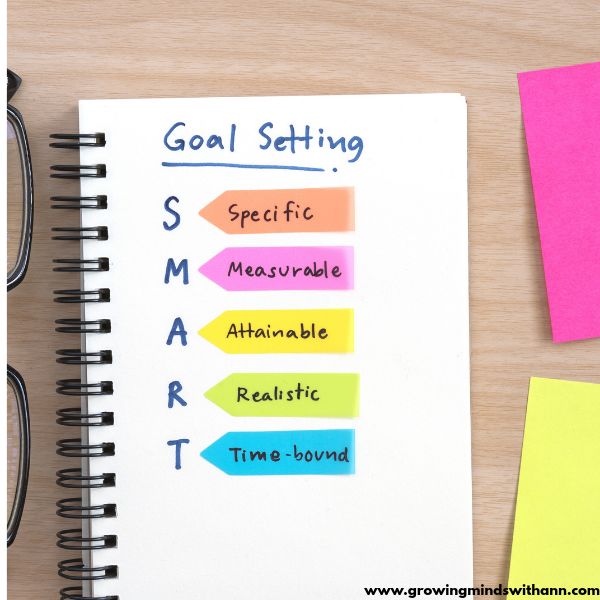
Once your child has decided what they want to achieve, it is your duty as the parent to help the child choose a goal that is realistic for their age and abilities.
Have a heart-to-heart talk with child to understand if the goal is something that can be achieved now or later.
For instance, if your child says they want to read 10 books in one week but they are still developing their reading skills, you can help them choose a smaller and more achievable target. You can help change the goal to 2-3 books a week.
Ask questions on how they intend to achieve the goal. This allow them to think about the goal rather than simply having to decide everything for them.
Remember that realistic does not mean the goal has to be easy. It should give your child something to work toward while still being possible with consistent effort.
Check out these articles for preschoolers:
Positive discipline techniques for preschoolers.
Fun ways to teach the alphabet to preschoolers.
3. Break Big Goals Into Small Steps
Sometimes, a goal can look so big to a child that they do not know where to begin. This is why I find it helpful to break bigger goals into small, simple steps that they can work on one at a time.
For instance, if your child wants to improve in a particular school subject such as math. You can help the child to decide which topic they can learn each day. Encourage them to ask for help when they do not understand something.
The same thing applies to goals outside school. If your child wants to learn how to keep their room tidy, you can start with putting away their toys each evening before gradually adding other tasks.
Breaking a goal into smaller steps makes it feel less overwhelming. It also gives children the opportunity to see their progress along the way, which can keep them motivated.
4. Create A Simple Goal Chart
One thing that helped my child take her goal more seriously was creating a simple goal chart together. After she told me that she wanted to become the Star of the Week, I knew she needed something that would remind her of what she was working toward.
So, I sat down with her and we created a simple chart. We wrote her goal at the top and listed some of the little things she could do throughout the week to work toward it. These included listening carefully to her teacher, participating in class, completing her schoolwork, and going through what she had been taught when she came back home.
After we finished, we placed the chart somewhere she could easily see it every day. This way, her goal was not something she would remember only when I reminded her. She could look at it herself and remember the little steps she needed to take.
I also encouraged her to mark off the things she had done. Seeing those small ticks and signs of progress made the goal feel more achievable to her.
You do not need to make a fancy goal chart for your child. A piece of paper or a notebook can work perfectly. What matters is helping your child put their goal somewhere visible and break it down into simple steps they can follow.
You may also like 20 STEM toys kids actually love for hands-on learning.
5. Make Goal Setting Fun
It is necessary to make goal setting enjoyable for the kids. The more fun it is, the more likely they are to stay interested and want to participate.
When I was helping my child work toward becoming the Star of the Week, I tried not to make the process feel like pressure. We talked about her goal, came up with small things she could do, and made her goal chart something she could actually enjoy looking at.
You can make goal setting fun by allowing your child to decorate their goal chart with stickers, drawings, or their favorite colors. You can also let them choose how they want to track their progress. Some children may enjoy putting a sticker on the chart, while others may prefer ticking off each completed step.
You can even turn it into a little family activity. Share your own goals with your children and let them see how you work toward it. You could even have a simple family goal where everyone works together toward something.
6. Help Kids Set Short-Terms And Long-Term Goals
As you are teaching your kids to set goals, also teach them that not every goals can be achieved within a few day. Help them understand that some goals can take longer periods such as weeks, months and even years before they can be achieved.
Understanding this difference can help children become more patient and realistic about what they want to achieve.
Encourage them to set both long-term and short-term goals. Start with short-term goals such as reading for 20 minutes every day in order to improve their reading skills. Then gradually introduce long-term goal such as learning a musical instrument.
I think this is an important lesson for children because we live in a world where we often want to see results quickly. Helping our kids understand that some things take time teaches them patience and consistency.
7. Be A Role Model
Children learn by imitation, it is not advisable to only teach these kids how to set goals. Model goal setting so that they can see what you are preaching to them in you.
You can talk to your children about a goal you are working on and share some of the steps you are taking to achieve it. It could be something related to your work, learning a new skill, keeping the house more organized, exercising, or even finishing a personal project.
For instance, if you have set a goal to read more books, let your children see you making time to read regularly. Whatever your goal is, let them see you working toward achieving it.
I discovered that children are often curious about what we are doing, so these moments can become simple teaching opportunities. You do not have to sit them down for a formal lesson about goal setting. Letting them see you make plans, put in effort, face challenges, and keep going can speak louder than many words.
Check out non-toy gift ideas kids actually love.
8. Check In Without Pressuring Them
Once your child has set a goal, it is natural to keep asking how things are going. But you need to be careful so that your encouragement does not turn into pressure.
When I was helping my child work toward becoming the Star of the Week, I reminded her about the little things she needed to do, but I did not want her to feel like I was watching her every move. I wanted her to gradually learn to remember her goal and make an effort on her own.
Checking in gives you an opportunity to listen. Your child may have lost interest, found something difficult, or realized that the original goal needs to be adjusted.
Instead of immediately correcting them, talk through it together and help them figure out what they can do next.
Fun Goal Setting Activities For Kids At Home
1. Goal Jar

This is a fun way to teach the kids about goal setting, get an empty transparent jar. Sit with your kids and talk about all they wish to achieve. This could be from reading more books and learning a new skill to keeping their toys organized or helping more around the house.
Write them down, one goal on each piece of paper, fold the papers, and place them inside the jar. You can decorate the jar and write it my goal jar or things I want to achieve.
Visit the jar every week and talk about the goals they have already worked on and the ones that they are yet to work on.
This will encourage them to make more efforts to see that they achieve all they planed to achieve.
2. My Goal Vision Board
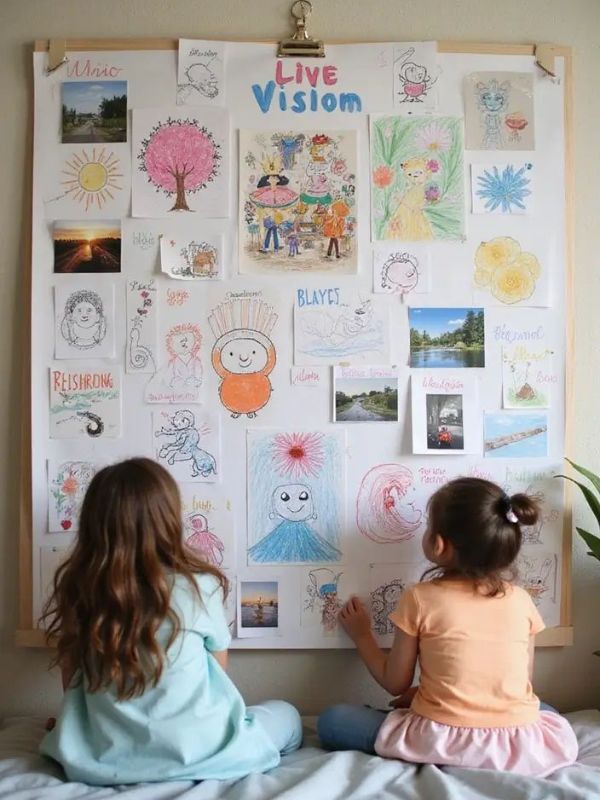
A goal vision board is another fun way to help children think about what they want to achieve. Instead of only writing their goals down, they get to use pictures, drawings, words, and other creative ideas to show what they are working toward.
You can make one together using a piece of cardboard, or an old poster board. Ask your child to choose one or two goals they would like to focus on and then find pictures or draw things that represent those goals.
For example, if your child wants to become a better reader, they could add pictures of books or draw themselves reading. If they want to learn how to ride a bicycle, they could include a picture of a bicycle and write a few small steps they need to take.
I love this goal vision board because because it makes kids to be creative while thinking about their goals. Allow them to choose the pictures, colors, and words they want to use rather than trying to make the board look perfect.
Once the vision board is ready, place it somewhere your child can see it regularly. It can serve as a gentle reminder of what they are working toward without making them feel pressured.
3. Goal Ladder
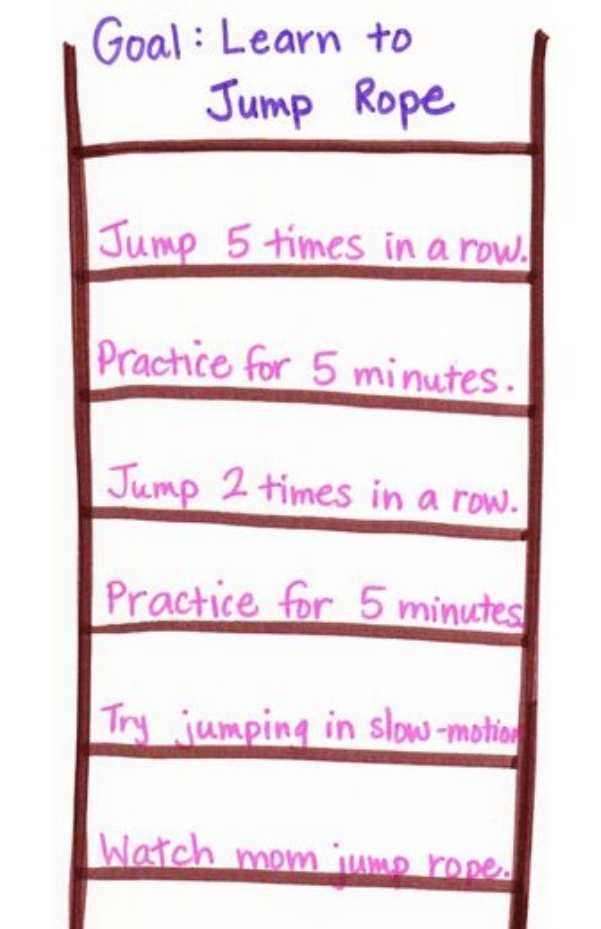
This simple activity helps children to see how small steps can lead them toward a bigger goal. I like this idea because it makes a goal feel less overwhelming and gives children something simple to work on one step at a time.
To make this, write your child’s main goal at the top of a piece of paper. Then, draw a ladder underneath it and write one small step on each rung. For example, if your child wants to improve their reading, the first rung could be reading for 10 minutes each day. The next could be learning a few new words, followed by reading a short book each week.
You can make the activity more enjoyable by allowing your child to draw, color, or decorate their ladder. Each time they complete a step, they can tick it off or add a sticker to that rung.
4. Family Goal Challenge
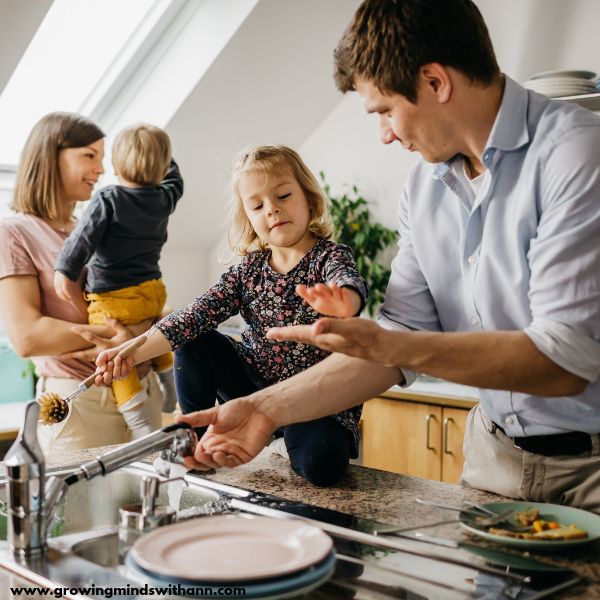
You can make goal setting more fun for your kids by turning it into a family challenge. This gives everyone an opportunity to choose something they would like to work on while encouraging one another along the way.
Each family member should choose one simple goal. It could be something personal, such as keeping a room tidy, learning a new skill, or spending less time on screens. You can also choose one goal that everyone works toward together.
Write down each goal and decide on a simple way to track progress. You can use a chart, stickers, or a family calendar. Check in with one another regularly and talk about how things are going.
You can include this in you family memory box to remember when such goal was set and achieved.
Age Appropriate Goal Ideas For Kids
1. Goal Ideas For Preschoolers
- Learning to dress themselves.
- Putting their toys away after playing.
- Practicing counting 1-20.
- Brushing their teeth with little or no help.
- Learning a new nursery rhyme.
- Practicing letters and number recognition.
- Learning to write their names.
- Learning how to use polite words like please and thank you.
Goal ideas For School-Age Kids
- Practicing spelling or multiplication tables.
- Reading a certain number of books every month.
- Learning a new skill such as musical instruments.
- Improving in a particular subject.
- Completing their chores without constant reminders.
- Keeping their school bag and learning materials organized.
- Learning how to improve their handwriting.
- Saving money towards something they want.
- Learning how to prepare simple meals or snacks.
- Spending less time on screen.
Goal Ideas for Tweens
- Improving their study habits and preparing for tests earlier.
- Reading a certain number of books each month.
- Improving in a subject they have been finding challenging.
- Learning a new skill.
- Saving money to get something they want.
- Keeping their room and personal belongings organized.
- Starting and completing household chores without constant reminders.
- Learning how to prepare simple meals.
- Learning and improving their time management skills.
- Reducing unnecessary screen time.
What to Do When Your Child Gives Up on a Goal
There will be times when your child starts working toward a goal and can decide that they are no longer interested to continue. Instead of seeing this as failure, use it as an opportunity to help them understand what made the goal difficult and how they can move forward.
Here are some of the things you can do:
- Ask your child why they no longer want to continue with the goal.
- Listen to their concerns without immediately judging or correcting them.
- Help them identify what is making the goal difficult.
- Break the goal into smaller and easier steps if it feels overwhelming.
- Remind them of why they wanted to achieve the goal in the first place.
- Encourage them to take a short break if they feel tired or frustrated.
- Help them adjust the goal if it is no longer realistic for them.
- Remind them that making mistakes and experiencing setbacks are normal parts of learning.
- Praise the effort they have already made instead of focusing only on the unfinished goal.
- Give them the opportunity to try again when they feel ready.
- Avoid comparing their progress with that of other children.
Frequently Asked Questions
At what age should kids start setting goals?
Children can start learning about simple goals from a young age. Just make sure the goal is age appropriate. As they grow, you can introduce goals that require more planning and consistency.
What are some good goals for kids to set at home?
Good goals depend on your child’s age, interests, and abilities. Some of the goals they can set include reading more books, improving in a school subject, learning a new skill, helping with chores at home, becoming more organized, reducing screen times , and spending more time on a hobby they enjoy.
How can I motivate my child to work toward a goal?
Start by helping your child choose a goal they genuinely care about and break it into small, manageable steps. Encourage their effort, check in with them gently, and celebrate their progress without making them feel pressured.
Should parents choose goals for their children?
Allow your kids to choose their own goals, if they are still younger it is helpful to involve them instead of choosing the goals for them. You can guide them and offer suggestions, but allowing them to have a say can help them feel more responsible for the goal and more interested in working toward it.
What should I do if my child keeps giving up on their goals?
The first thing to do is to understand why they are giving up, their reason will give you clue on how to encourage them tp continue pushing. The goal may be too difficult, too large, or no longer interesting to them. You can help them make the goal smaller, adjust it, or take a short break before trying again.
How often should children check their goals?
There is no fixed rule to that, but checking in once a week can be a simple way to see how things are going. Younger children may benefit from checking their goals more frequently, especially when they are working on short-term goals.
What if my child does not achieve their goal?
Not achieving a goal does not mean your child has failed. Talk about what they learned, what made the goal difficult, and whether they would like to try again or choose a different approach. The process can be just as valuable as reaching the final goal.
Conclusion
Learning how to encourage kids to set goals at home should not have to involve strict routines. Just starts with something as simple as listening to what your child wants to achieve and helping them figure out how to get there.
I saw this with my own child when she wanted to become the Star of the Week but was not sure what she needed to do. By helping her break the goal into smaller steps and creating a simple chart she could see every day, I was able to guide her without putting unnecessary pressure on her.
Our children will not achieve every goal they set, and that is okay. What matters is that we give them opportunities to learn about effort, patience, consistency, and trying again.

